
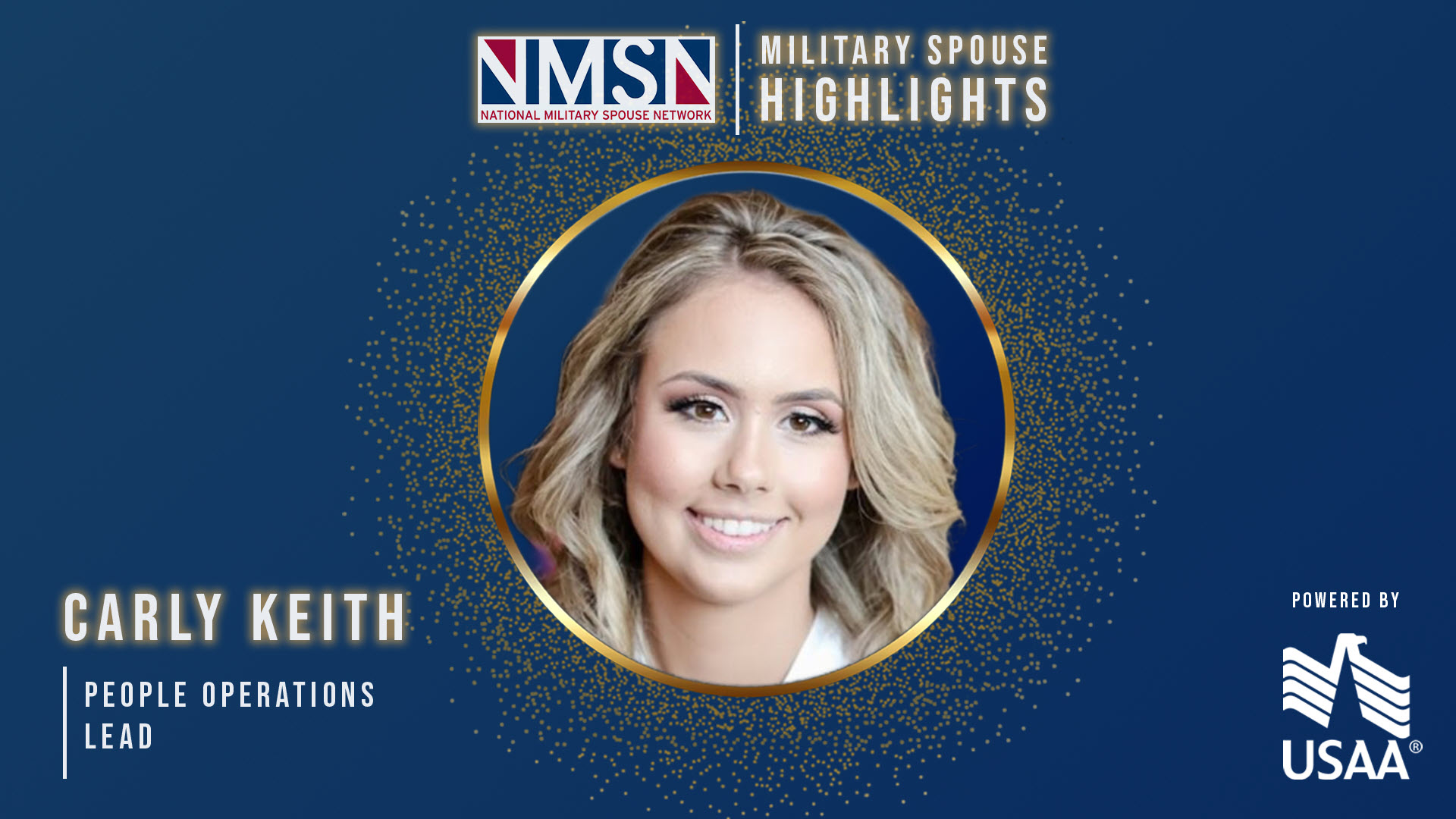
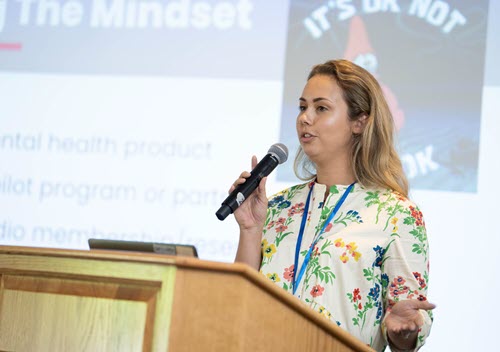
Carly Keith
People Operations Lead
Service Member's Branch - Air Force
Service Member's Status - Currently Serving - 7 years
 |
What has been your military spouse career/entrepreneur journey so far?
My military spouse career journey began seven years ago when I married my active-duty spouse while building a career in Human Resources. I started my HR career in the corporate world in Tampa, Florida, and loved the career path I was on. When we moved to Mississippi, my career trajectory changed significantly, and I struggled to find opportunities that matched my experience. I worked as a civilian in the HR office on base for a year, but ultimately left because of a difficult work environment. I then secured a remote position with a technology company, where I spent seven years building my career while navigating the realities of military life, including moves, TDYs, and growing our family. After taking a leave, I transitioned to another technology company, where I continue to work today.
Throughout this journey, I have learned that military life may change the path you envision, but it does not have to limit your career. My own experiences have made me passionate about helping other military spouses find meaningful employment and build careers that can move with them. Today, I use my HR and recruiting experience to help connect military spouses with opportunities and to show them that they can continue to grow professionally while supporting their families and their service members.
Tell us about yourself.
I am a military spouse of seven years, married to an active-duty service member, and a proud mom to one. I have 11 years of experience as a human resources professional, where I've developed a passion for working with people and helping others succeed. Being a military spouse has also strengthened my adaptability, resilience, and ability to support others through change. I genuinely enjoy connecting with people, building relationships, and finding ways to make a positive impact.
Tell us about a "typical" day in your professional life.
I love my “typical” day because it allows me to balance being a dedicated professional and a present mom. I start my mornings slowly with my daughter, getting her ready for school, and then begin my workday meeting with my company and clients to understand their needs and determine how I can best help their organizations grow and sustain that growth. No two days are exactly the same—I may work on benefits strategy, employee relations, legal or compliance matters, payroll, or any of the many functions that fall under HR.
Because I work remotely, I have the flexibility to pick my daughter up from school and wrap up my workday at a reasonable time. That gives me the opportunity to spend the late afternoon and evening with my family—cooking dinner, playing at the playground, and simply making memories together. It can definitely be tiring to balance all of these responsibilities, but it is incredibly rewarding. I feel fortunate to be fulfilled in both my professional and personal life.

What has been your biggest military spouse career struggle and how did you overcome it?
My biggest military spouse career struggle was moving to a place that was completely different from what I had known and having to give up what I considered my dream job. I experienced a lot of frustration and resentment, and at one point I accepted a position that paid about half of what I had been making, only to find myself in an extremely stressful work environment. I spent the last seven years living in a small military town in the South, where employment opportunities for military spouses can be limited and many spouses face the same challenge of trying to build a career while constantly navigating military moves.
Instead of allowing that experience to define my career, I became intentional about networking and building relationships. I worked hard to expand my professional network and eventually secured a remote HR position that has given me the opportunity to continue growing in my career regardless of where the military takes my family. In fact, when I was interviewing, I was so concerned that my location would work against me that I did not initially share where I lived. That experience taught me the importance of advocating for myself, building a strong network, and not assuming that my location has to limit my professional opportunities.
What role did mentors and sponsors play in your journey?
My biggest mentor was actually my boss, who was also a military spouse married to an active-duty pilot, so our experiences were very similar. She took me under her wing and became someone who not only supported my professional growth but truly understood the unique challenges that come with military life. When unexpected situations came up, whether it was a quick move, an unexpected TDY, or another military-related change, she was incredibly accommodating because she understood that sometimes military obligations are outside of our control.
Having a leader who understood my life and trusted me to continue delivering professionally while navigating those challenges made a tremendous difference in my career. She showed me what supportive leadership can look like for military spouses, and her mentorship gave me the confidence to continue pursuing my career while embracing the realities of military life.
How does your career path differ from what you imagined for yourself?
I started my HR career in the corporate world in Tampa, Florida, and I loved the path I was on. When I moved to Mississippi as a military spouse, my entire career trajectory changed, and for a while, I wasn't sure I would be able to have the career I had envisioned for myself. I'm naturally persistent, so I refused to accept that my circumstances had to determine my future. I worked incredibly hard to build connections, network, apply for opportunities, and keep going until I found a role that allowed me to continue growing professionally.
Since then, my career has taken on a purpose I never anticipated. I have made it a priority to help other military spouses navigate the workforce, both through the spouses I know personally and through my work in recruiting. I now see my career as more than just building my own professional success—it is also about creating opportunities, providing hope, and showing other military spouses that their careers can continue to grow, even when military life changes the path they originally imagined.
How did military life (PCSing, deployments, trainings, etc) factor into your career decisions?
Military life has played a major role in my career decisions because I have learned that plans can change very quickly. I have received orders to move to a place I had never even considered visiting, only to end up living there for seven years. I have also had as little as two days' notice to prepare for a nine-month TDY, and at another point, I had about two weeks to move across the country to California with two dogs and a baby while also selling our home.
Each of these experiences presented significant challenges, but they also taught me to be adaptable and to look for employers who understand the realities of military life. Having the ability to work a modified schedule, take time off when needed, and continue meeting my professional responsibilities has made an enormous difference. Flexibility has not only allowed me to navigate these major life changes; it has allowed me to remain committed to my career while supporting my family and my spouse's military service.
What resources have you found to be useful in your career/entrepreneur journey?
LinkedIn has been one of the most valuable resources in my career journey, particularly for networking, building professional relationships, and discovering opportunities that may not have been available through traditional job searches. I have also found Facebook groups specifically for military spouses to be incredibly helpful. These communities provide a place to exchange advice, share job leads, make connections, and hear from other spouses who understand the unique challenges of building a career while navigating military life. More than anything, these networks have reminded me that I am not alone and that there is a community of people willing to help each other succeed.
Final word: what are your top tips for other military spouses about navigating a career within the military lifestyle?
One of my biggest goals is to become a valuable resource—almost a career guide or counselor—for military spouses. I want to be the resource that my mentor was for me: someone who understands the challenges of military life, helps others build their networks, and connects them with opportunities that can set them up for long-term career success. I bring both professional experience in HR, recruiting, and employee relations and, just as importantly, the personal experience of being a military spouse and understanding how difficult this journey can be.
My biggest advice is do not settle on your career simply because you are a military spouse. Find an industry or career path that you genuinely enjoy and keep pursuing it. The reality is that military spouses often have to work 10 times harder to build and maintain a career because of moves, deployments, limited local opportunities, and the unpredictability of military life. That can be incredibly frustrating, but I believe the extra effort can also make you incredibly resilient and resourceful.
Network constantly, build genuine relationships, tailor your resume to the position you are applying for, and put real effort into every opportunity. Most importantly, do not give up when you feel invisible. I know firsthand how discouraging that can be, but sometimes it only takes one conversation or one interview to get your foot in the door. Keep going, keep advocating for yourself, and remember that your career is worth pursuing.
For spouses transitioning with their service member into veteran or retired life, I would encourage them to continue using the network and professional identity they built during military life. The transition may change the circumstances, but the skills, relationships, resilience, and experience you developed as a military spouse are still valuable. Your career does not have to end when the military chapter changes—it can evolve with you.
| Listen to an interview with Carly to hear more about her story. |
Tell Us YOUR Story |
Meet Spouses from Previous Weeks:






























"The stories, experiences, and perspectives shared in these Military Spouse Highlights are provided by the individual contributors and reflect their personal views. While the National Military Spouse Network (NMSN) is honored to share and celebrate these voices, the content does not necessarily represent the views or endorsements of NMSN."