
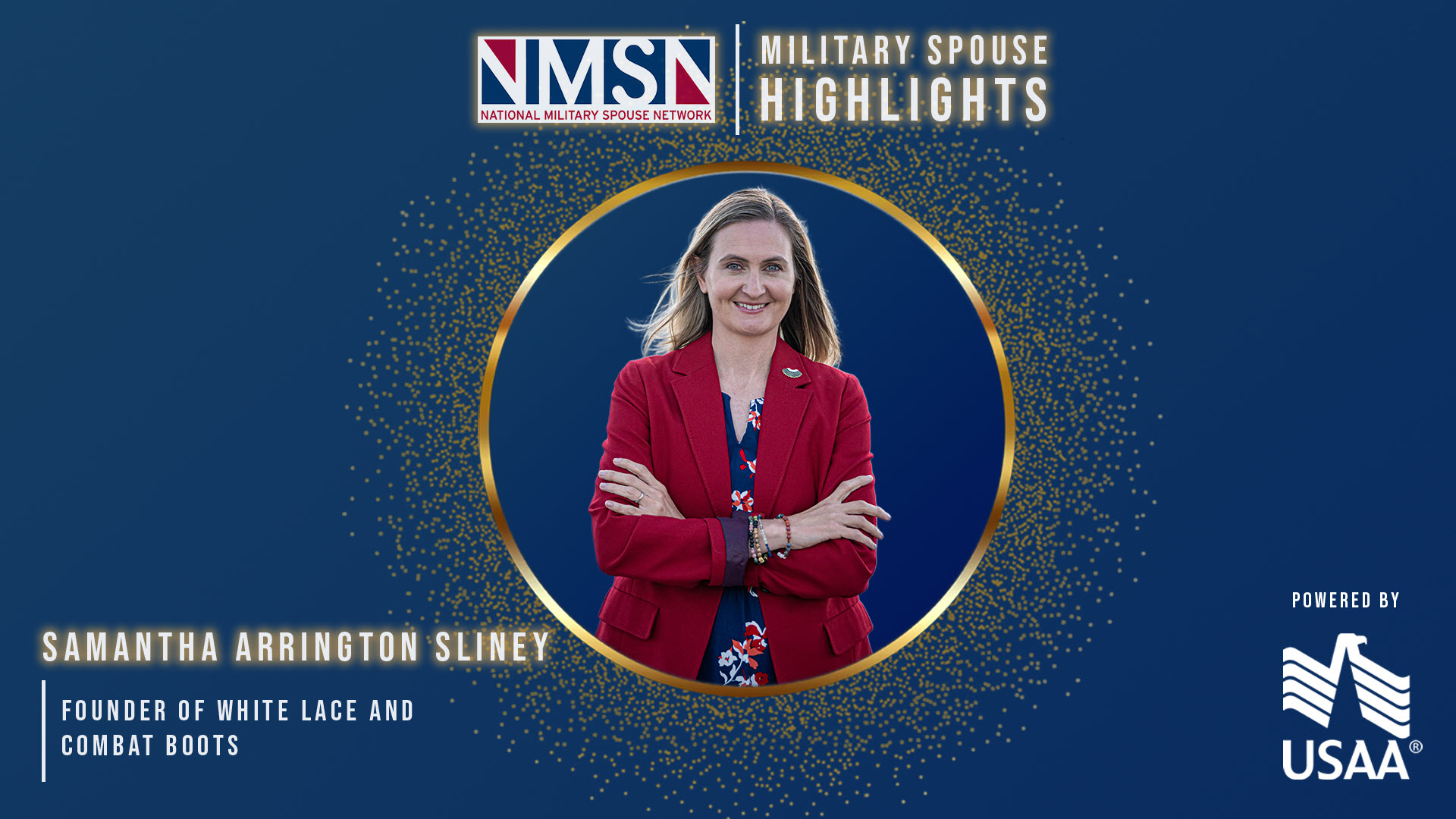
Samantha Arrington Sliney
Founder of White Lace and Combat Boots
Service Member's Branch - Army
Service Member's Status - Currently Serving - 21 years
 |
 |
 |
What has been your military spouse career/entrepreneur journey so far?
I moved to North Carolina in 2008 because of my spouse's military service, where I completed my bachelor's degree in Journalism and Mass Communication before earning my J.D. from North Carolina Central University. As my husband continued serving in the Army, we realized that frequent military moves could make maintaining a legal career across multiple states difficult, so I joined the Air Force as a Judge Advocate—a path that allowed me to continue practicing law wherever the military sent us (hopefully together). During my 10.5 years on active duty, I earned an LL.M. in Homeland and National Security Law and discovered a passion for military family policy through volunteer leadership with the Department of the Air Force Women's Initiatives Team and Military Spouse J.D. Network. After transitioning to the Air National Guard in 2024, I entered my current role as the Southeast Regional Liaison for the Department of War-State Liaison Office. I founded White Lace & Combat Boots in 2025, transforming years of advocacy into a platform dedicated to policy education, storytelling, and empowering others to create meaningful change. Presently, I am pursuing a Master of Public Affairs and Politics at Rutgers University, and continue to write award-winning children's books that encourage all children to dream big and challenge societal stereotypes that can limit what they believe is possible.
Tell us about yourself.
My name is Samantha Arrington Sliney, and I'm originally from Florida but have called North Carolina home since 2008 because of my family's military service. I'm the spouse of an active-duty Army Green Beret, a current Air National Guard Judge Advocate, and together we're raising four children in our dual-military family. When I'm not working, I enjoy writing children's books that encourage kids to dream big and challenge gender stereotypes, reading, and spending time outdoors with my family. I'm passionate about advocating for military families and believe that policies inform culture, and stories preserve legacies.
Tell us about a "typical" day in your professional life.
There really isn't a “typical” day in my professional life, and that's one of the things I enjoy most. As the Southeast Regional Liaison for the Department of Defense Defense-State Liaison Office, I work with state lawmakers, military leaders, and community partners across seven states to advance policies that strengthen support for service members and their families. As the Air National Guard State Defense Counsel, I provide legal representation and advice to Airmen facing disciplinary actions, administrative separations, and other adverse personnel matters, helping them navigate some of the most challenging moments of their military careers.
Through my platform, White Lace & Combat Boots, I closely follow federal legislative efforts—especially the National Defense Authorization Act—and create educational content that helps the public understand issues affecting service members and military families. I conduct research, write about pending legislation, engage with lawmakers and stakeholders to advance meaningful policy solutions, and teach others how to effectively advocate for change. I also write award-winning children's books that encourage all children to dream big and challenge societal gender stereotypes that can unnecessarily limit what they believe is possible for their future. Whether I'm working on policy, advocacy, or storytelling, my goal is the same: to help create an environment where military families don't just get by—they have the opportunity to thrive.

What has been your biggest military spouse career struggle and how did you overcome it?
The biggest challenge in my military spouse career has been deciding when my career would take the lead and when my husband's would. As a dual-military family, we've had to make difficult decisions about assignments, career opportunities, and what was best for our family. Those decisions became even more complex as our family grew. We welcomed three children while we were both serving on active duty, and our fourth was born after I transitioned to the Air National Guard and into my current civilian role. Every new chapter required us to reevaluate not only our careers, but also the kind of life we wanted to create for our children.
While we were both on active duty, there were times when our careers were on separate paths, and we faced the very real possibility of being geographically separated. Ultimately, one of the reasons I transitioned from active duty to the Air National Guard was to keep our family together and ensure our children could grow up with both parents at home.
That decision wasn't easy. Like many military spouses, I've had to reconcile ambitious professional goals with the realities of military life, including geographic limitations and career opportunities that don't always align with the timing of our family's needs. Instead of viewing those constraints as barriers, I learned to be intentional, creative, and patient—seeking opportunities that aligned with both my purpose and my family's priorities. Ironically, those choices led me to discover my passion for military family policy, launch White Lace & Combat Boots, and build a career that has been even more fulfilling than the one I originally envisioned. My journey has taught me that career success isn't always about following the path you planned; sometimes it's about having the courage to build a new one.
What role did mentors and sponsors play in your journey?
Mentors and sponsors have been instrumental throughout my career, especially as a servicewoman, military spouse, and mother in a dual-military family. My sponsors were the people who saw potential in me before I saw it in myself. They advocated for me, opened doors I never could have opened alone, invited me into rooms where important decisions were being made, and entrusted me with opportunities that expanded not only my legal expertise but also my policy knowledge and leadership experience. Those opportunities fundamentally shaped the career I have today.
My mentors played a different, but equally important, role. They provided honest feedback, challenged me to grow, celebrated my successes, and gave me a safe place to process the frustrations, doubts, and competing demands that come with balancing military service, motherhood, and marriage in a dual-military family. They helped me navigate not only the practical realities of building a career, but also the ongoing tension of balancing my professional ambitions with my identity as both a servicewoman and a military spouse. Looking back, I've realized that I didn't achieve my goals on my own—I did so because incredible mentors and sponsors invested in me, believed in me, and challenged me to become the leader I aspire to be for others.
How does your career path differ from what you imagined for yourself?
My career path looks nothing like I imagined and I'm grateful for that. I originally went to school to become a journalist, but as I planned a future alongside my husband, an Army Soldier, I realized that frequent military moves could make it difficult to build the kind of journalism career I envisioned. That led me to law school. Even then, I never imagined I would join the military as an Air Force Judge Advocate. After interning with an Air Force legal office following my first year of law school, I fell in love with the variety of the practice and the opportunity to serve in ways that extended far beyond the courtroom.
Another unexpected turning point came in 2019, when I realized that, as a lawyer, I didn't have to simply interpret the law, I could help shape it. That realization sparked my passion for public policy and legislative advocacy, eventually leading me to transition from active duty into a full-time policy role. Today, I represent the Department of War in state government relations, working with lawmakers and state leaders to advance policies that support service members and their families. It is, quite honestly, my dream job.
When I was preparing to leave active duty, my husband gave me a piece of advice I'll never forget: “Figure out a way to get paid for what you love doing.” At the time, I wasn't sure how I was going to find a job doing the very thing I volunteered a lot of my time to do for free. Looking back now, it's remarkable how every unexpected twist and turn led me to exactly that place. My career may not have followed the path I planned, but it led me to one that is even more meaningful than I could have imagined.
How did military life (PCSing, deployments, trainings, etc) factor into your career decisions?
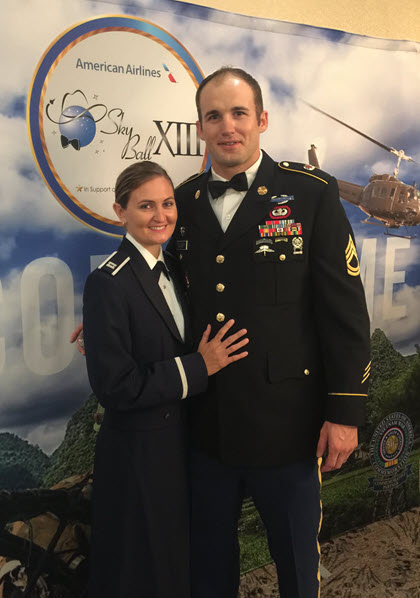
Military life influenced nearly every career decision I've made. PCS moves, deployments, military schools, and the unpredictability that comes with two military careers meant that our professional decisions were never made in isolation—they always had to be made in the context of what was best for our family. Every opportunity required us to ask not just, “Is this the right career move?” but also, “Will this work for our family?”
Those realities shaped some of my biggest career pivots. I chose to become an Air Force Judge Advocate because federal practice provided the flexibility to continue practicing law despite military moves. Later, I transitioned from active duty to the Air National Guard because our family was facing the possibility of geographic separation, and keeping our family together became the priority. As our family grew to four children, those decisions became even more complex, requiring us to balance deployments, military training, childcare, and the competing demands of two careers in service.
Rather than seeing military life as something that held my career back, I've learned to build a career that works alongside it. Military life taught me to be adaptable, creative, and intentional, and it ultimately led me to a career in military family policy that allows me to help improve the lives of other military families navigating many of the same challenges we've experienced ourselves.
Have you ever had to geo-bach due to your career/entrepreneurship?
Yes. During the first years of my career, my husband and I geobached because there wasn't a position for me at his duty location. Fortunately, we were within driving distance of one another, so he maintained our home while I prioritized going back every weekend—or whenever my schedule allowed. One of the biggest factors in making that season manageable was having a supervisor who understood. She was also in a dual-military marriage and was geobaching for her spouse, so she recognized the sacrifices involved and supported me in ways I'll always be grateful for.
One important caveat is that we did this before we had children. As our family grew, our perspective changed. When we were later faced with career decisions that could have resulted in another period of geographic separation, we chose a different path because we recognized how much more difficult that arrangement would be for our family. In fact, that realization was one of the factors that influenced my decision to transition from active duty to the Air National Guard so we could keep our family together.
The biggest lesson I learned is to be intentional about protecting your relationship and to make decisions based on what is best for your family as a whole. It's easy for work to consume every conversation and every ounce of energy, especially when you're apart. Whether it's making the drive home, scheduling regular video calls, or simply setting aside uninterrupted time to connect, those moments matter. If you're considering geobaching, weigh not only the professional opportunities but also the personal and family implications. Every family's circumstances are different, and there isn't a single right answer—only the one that best supports the life you want to build together.
What resources have you found to be useful in your career/entrepreneur journey?
The most valuable resources in my career haven't been books or programs—they've been people. Mentors, sponsors, colleagues, and professional networks have consistently opened doors, challenged me to grow, and provide guidance at pivotal moments in my career. Organizations like the Military Spouse J.D. Network, AcademyWomen, and other military-connected professional communities have connected me with incredible leaders who understood the unique challenges of building a career while navigating military life.
I've also learned that volunteering can be one of the most powerful career development tools available. My volunteer work with the Department of the Air Force Women's Initiatives Team allowed me to build expertise, develop relationships, and gain leadership experience that ultimately opened the door to my current career in public policy.
Finally, I believe one of the greatest investments you can make is in yourself. Never stop learning and never stop growing. Whether it's pursuing another degree, attending conferences, reading books, listening to podcasts, seeking out mentors, or simply saying yes to opportunities that stretch you, embrace the mindset of being a lifelong learner. Every experience teaches you something if you're willing to learn from it. If I could offer one piece of advice, it would be this: don't wait for the perfect opportunity to find you. Say yes to opportunities to learn, serve, and build relationships. You never know which volunteer role, conversation, or connection will change the trajectory of your career.
If you and/or your spouse have transitioned from active duty to your current status, what resource or tool did you find to be the most helpful?
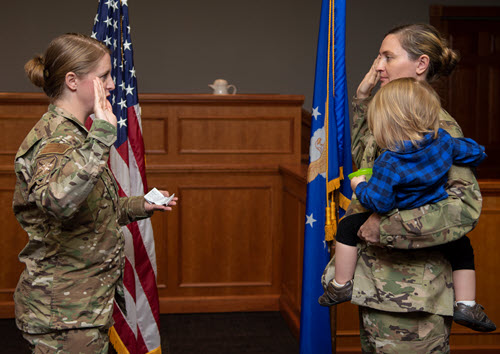
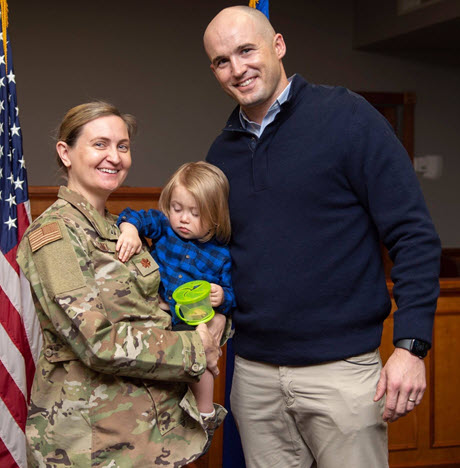
My transition was a little different than most. It happened very quickly and wasn't something I had been planning for years. While I was on parental leave with my third child, I learned that the Air Force was considering assigning me to a different location than my husband. Faced with the possibility of our family being geographically separated, I had a very short timeline to decide what came next. Thankfully, the stars aligned—at the same time, a federal civilian attorney position opened with the Department of the Army in the very organization where I had been serving, allowing me to continue meaningful work while transitioning to the Air National Guard and keeping our family together. Because my husband remained on active duty and I continued serving in the Guard, I never really felt like I was leaving the military community—I was simply entering a new chapter within it.
Looking back, I probably didn't take advantage of many of the formal transition resources that were available because everything happened so quickly and my next steps came together almost simultaneously. If I could offer advice to others, it would be to do your research and take advantage of the many transition programs and resources that are available. Even if you think you have a plan, there is tremendous value in learning from others who have already navigated that path. For me, the greatest resource wasn't a specific program—it was my people. My mentors, sponsors, colleagues, and friends provided guidance, perspective, and encouragement through every career transition I've experienced.
I've also come to realize that military families don't experience just one transition. A PCS is a transition. A deployment is a transition. Leaving active duty is a transition. Having children, changing careers, or even becoming an empty nester are all transitions that require us to adapt and grow. The good news is that the military community has an incredible network of people and programs designed to support those moments. Don't hesitate to lean on them—they can often meet you exactly where you are and help you navigate whatever comes next.
Final word: what are your top tips for other military spouses about navigating a career within the military lifestyle?
If I could offer a few pieces of advice to other military spouses, the first would be to stop thinking of your career as a straight line. Military life rarely allows for a perfectly linear career, and that's okay. There will be seasons when your career takes the lead, seasons when your spouse's career takes priority, and seasons when your family needs to come first. Success isn't about following someone else's timeline—it's about intentionally building a career that aligns with your values and your family's priorities.
Second, think strategically about the skills you already have. Military spouses often underestimate the value of the experience they've gained through volunteering, leading organizations, advocating for others, or supporting their communities. Those experiences build real leadership, communication, and problem-solving skills. My own transition into public policy grew directly from volunteer advocacy. At the time, I didn't realize I was building the experience that would lead to my dream career. Learn to recognize and confidently articulate your transferable skills when you're re-entering the workforce, changing careers, or seeking advancement.
Third, invest in relationships and never stop learning. Mentors, sponsors, and professional networks have opened doors throughout my career, while continuing my education and seeking new opportunities has kept me growing. Be a lifelong learner.
Finally, remember that your career and military life don't have to compete with one another. Some of my greatest opportunities came because of the military, not despite it. If you're transitioning out of active duty or supporting a spouse through retirement, give yourself permission to redefine success. You're not starting over—you're building on the resilience, leadership, and adaptability you've already developed. Sometimes the career you ultimately build is even better than the one you originally imagined.
| Listen to an interview with Samantha to hear more about her story. |
Tell Us YOUR Story |
Meet Spouses from Previous Weeks:






































"The stories, experiences, and perspectives shared in these Military Spouse Highlights are provided by the individual contributors and reflect their personal views. While the National Military Spouse Network (NMSN) is honored to share and celebrate these voices, the content does not necessarily represent the views or endorsements of NMSN."