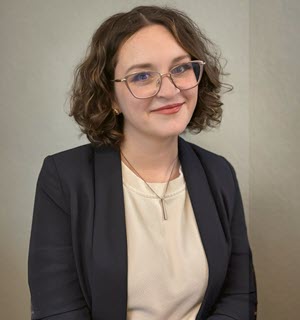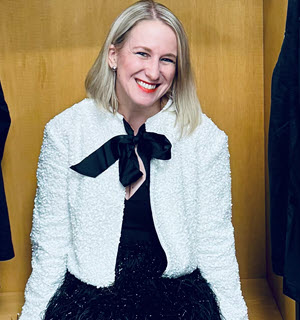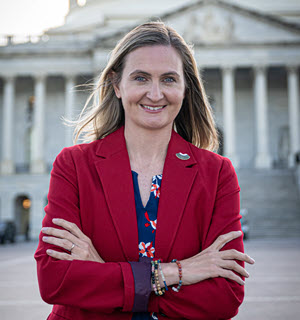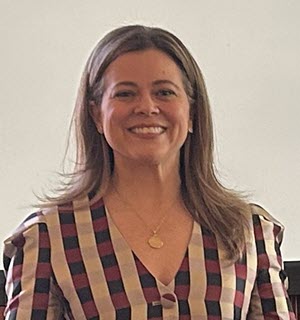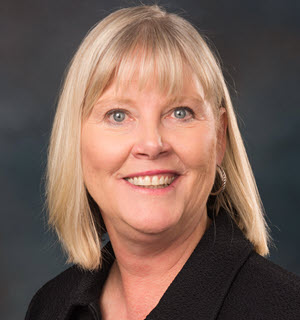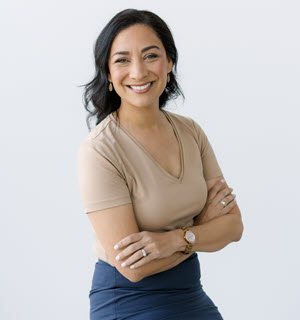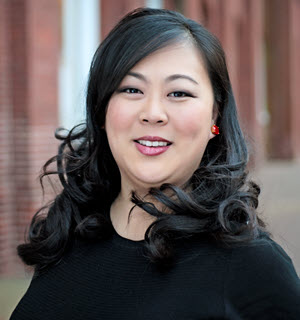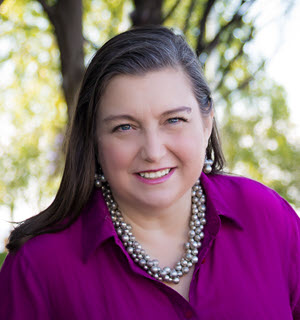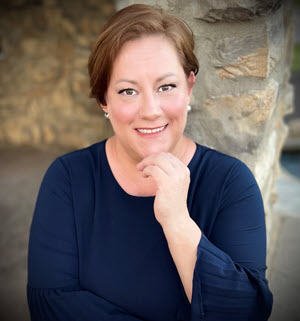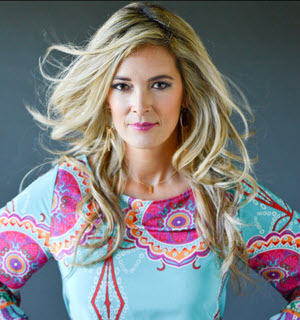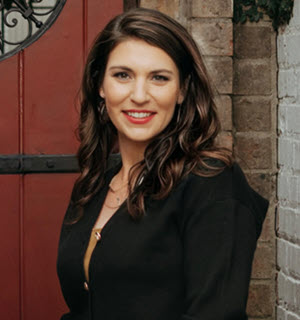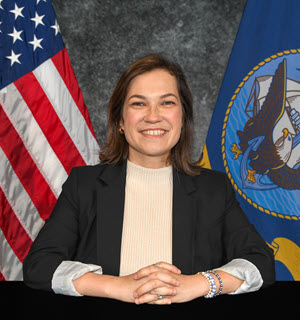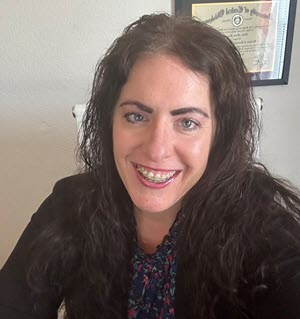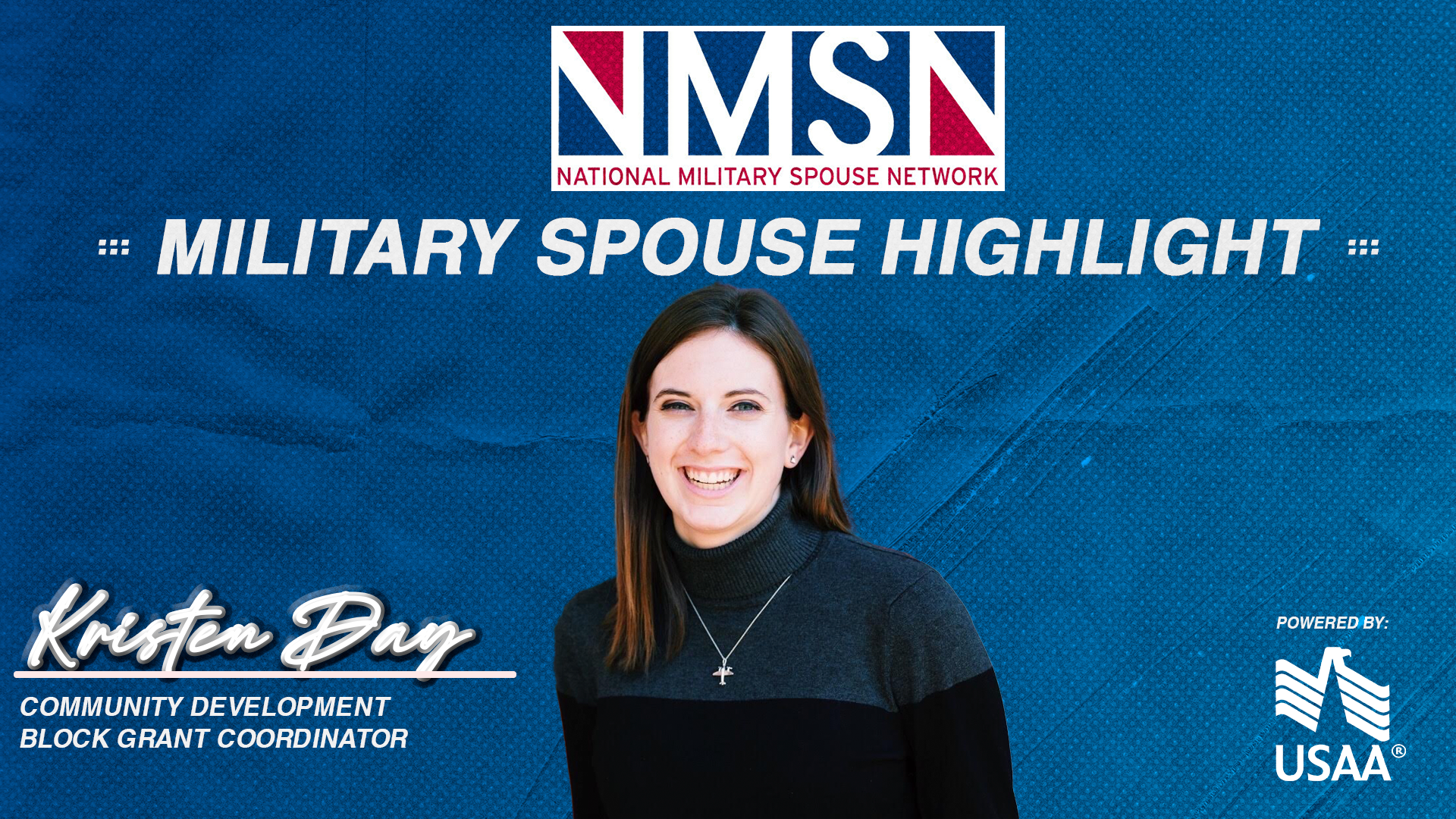
Kristen Day
Community Development Block Grant Coordinator, City of Enid, Oklahoma
Service Member's Branch - Air Force
Service Member's Status - Currently Serving - 3 years
 |
What has been your military spouse career/entrepreneur journey so far?
After graduating from the University of Delaware in 2022, I married my now-husband and very shortly after, moved to Vance AFB in Enid. I was extremely fortunate to start my career as the Disaster Resiliency Manager at United Way Worldwide in which I supported local United Ways after natural and man-made disasters. During this time, I served as a Board Member on the Vance Spouses Club and was able to contribute to the opening of the Vance Spouse Space. I was fortunate that this career was portable, and could accompany my husband on an extended TDY down to Randolph AFB. Part of the way through this TDY, I switched jobs and started in my new role as the Community Development Block Grant Coordinator for the City of Enid. I currently serve in this position in which I administer a federal grant from HUD for the City of Enid, which primarily benefits low-moderate income residents in Enid. I continue to serve on the Vance Spouses Club and also volunteer at my local library as a co-teacher for a free Citizenship Class. Outside of work, I am passionate about writing and have contributed articles to Wives of the Armed Forces, Military Spouse Advocacy Network, and Enid Monthly.
Tell us about yourself.
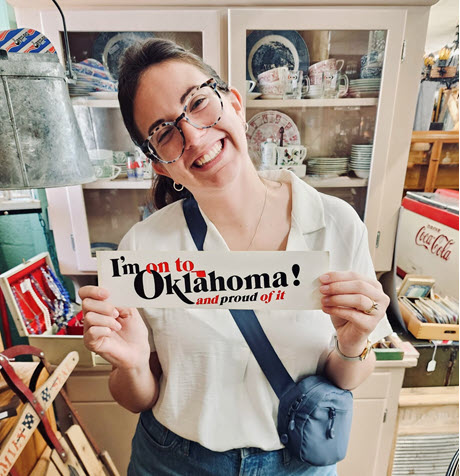
My name is Kristen Day and I am from Pennsylvania and currently live in Enid, Oklahoma. I enjoy language learning and community engagement and currently enjoy co-teaching a citizenship class at my local library. I also have a passion for writing and write a monthly column, titled 'Simple Pleasures' for our local magazine, Enid Monthly.
Tell us about a "typical" day in your professional life.
My typical day in my professional life involves working closely with local non-profits. Depending on the time of year, I could be working on developing the application cycle for our upcoming funding year, or I could be conducting monitoring and compliance visits for current year grantees. On the average day, I'll be reviewing and processing reimbursement claims from our grantees, preparing reports for HUD on the city's accomplishments, and working on the competitive bidding process for projects that the city is directly administering.

What has been your biggest military spouse career struggle and how did you overcome it?
When I was in college, I was studying for and preparing to attend law school. After taking my LSAT, applying to schools and being accepted, we found out that where we would be moving did not have a law school within what I would consider to be a reasonable driving distance. As a result, I decided to pivot and pursue a job opportunity in the non-profit sector. Additionally, I decided to utilize the MyCAA program to pursue a Paralegal Certificate to continue to learn more about the legal profession and keep the credential in my repertoire to make me competitive for paralegal or legal assistant positions.
Leading up to finding out our second assignment, I once again decided to apply for law schools strategically located around bases where we were reasonably expecting to move. However, we found out that we would be staying at our current station for an additional 3 years. As a result, I decided to really dig in and invest in my local community which is what prompted my decision to work for local government and volunteer out in the community.
What role did mentors and sponsors play in your journey?
My mentors have played such a large role in encouraging me to advocate for my needs and talents. In particular, one of my mentors highly encouraged me to look into ways to get involved outside of work that tap into my interests and talents. For example, she encouraged me to apply for board positions at local organizations and identify professional development network groups to join.
Another one of my mentors challenged me and supported me by providing reading materials, and introductions, to channel my experience navigating wanted to pursue an advanced degree as a military spouse into advocacy efforts for others.
How does your career path differ from what you imagined for yourself?
I envisioned myself going directly from my undergraduate degree to pursuing an advanced degree in law. In particular, I was expecting to attend law school. Due to the challenge posed by our current station location, I have now established a meaningful start to a career in the non-profit and public sectors, managing grants that address some of the most pressing needs of our communities.
How did military life (PCSing, deployments, trainings, etc) factor into your career decisions?
Military life has definitely highlighted the need for a flexible, ideally portable career. Additionally, military life has impacted the opportunities to enroll in advanced degree programs, in large part because of the financial burden I could potentially undertake with the uncertainty that upon graduation we would live in an area where I would be able to practice.
What resources have you found to be useful in your career/entrepreneur journey?
I think mentors have been my number one resource in my career in addition to tapping into DoD sponsored resources like MyCAA and resources provided by nonprofits to make informed career decisions.
Final word: what are your top tips for other military spouses about navigating a career within the military lifestyle?
My first tip is to recognize that your value as a person doesn't lay in the job title or company you work for - it's in the impact of your work. In that same vein, I encourage military spouses to think about your 'why' and use that to drive career decisions. Oftentimes implementing this perspective can take you to places or positions you may have never considered and allows you to think creatively about how you want to show up in the world through the work you do.
My second tip is to get out and get involved in your community. The reason for this is two-fold. First, it allows you to do good in your community by lending your unique perspective as a military spouse to your local community while also building skills that you can take into employment. Secondly, it helps you build your network and you never know if that person you serve on a board with or volunteer alongside might be your next employer or introduction.
| Listen to an interview with Kristen to hear more about her story. |
Tell Us YOUR Story |
Meet Spouses from Previous Weeks: