
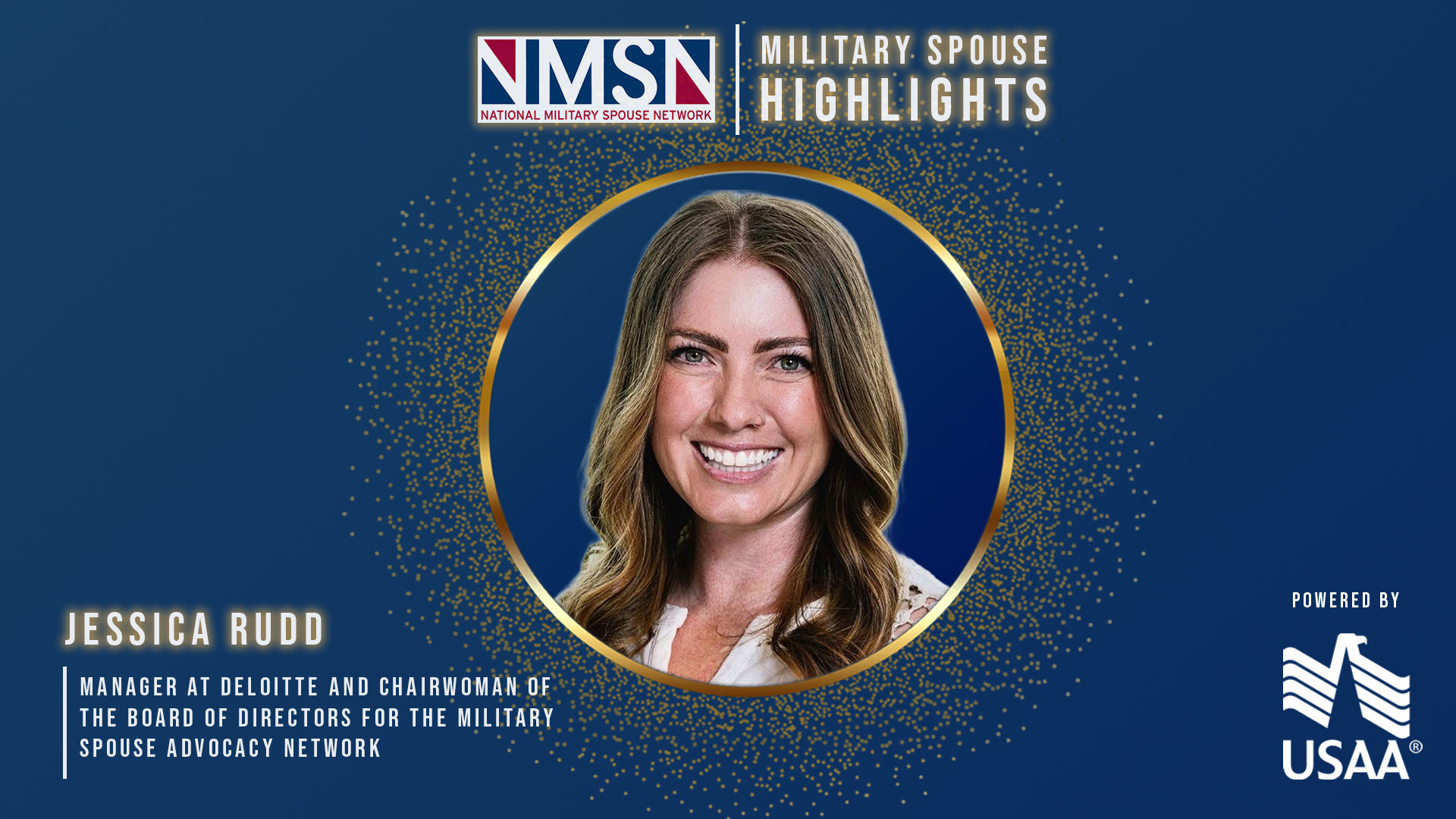
Jessica Rudd
Manager at Deloitte and Chairwoman of the Board of Directors for the Military Spouse Advocacy Network
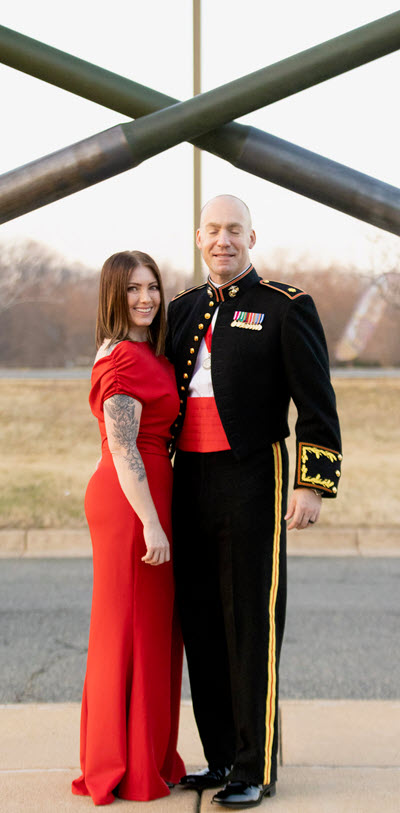
Service Member's Branch - Marine Corps
Service Member's Status - Veteran - 23 years
 |
What has been your military spouse career/entrepreneur journey so far?
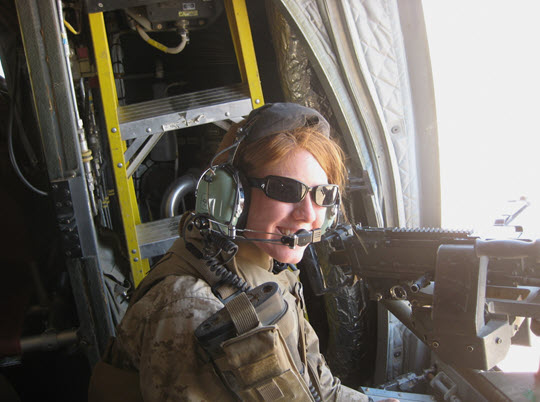
My military spouse journey has spanned more than 23 years, and if there's one thing I've learned, it's how to reinvent myself with every new chapter. From 2006–2010, my husband and I served as dual active-duty Marines. After leaving the Marine Corps, I found myself navigating civilian life with two young children while my husband served as a drill instructor at Parris Island. During that time, I worked on a government contract and earned my bachelor's degree.
In 2012, I stepped away from my career to focus on raising our family through the demands of military life. Our next PCS to Twentynine Palms led me to a remote, part-time role with Apple, where I worked while homeschooling our children from 2014–2017. That experience taught me how valuable flexibility can be for military spouses trying to balance career aspirations with family and service.
In 2017, I was honored to be named Marine Corps Spouse of the Year, which opened the door to military spouse advocacy. Following another PCS to Northern Virginia, I returned to a traditional office role supporting the Department of State and the Marine Corps Embassy Security Group while earning my MBA. In 2020, I joined Deloitte, where I've continued to grow as a consultant supporting complex government transformation initiatives.
Today, I serve as Chairwoman of the Board of Directors for the Military Spouse Advocacy Network while continuing my consulting career. Looking back, my career hasn't been linear, but every move, every PCS, and every reinvention has strengthened my resilience, expanded my perspective, and fueled my passion for advocating for military families and helping others navigate the unique challenges of military life.
Tell us about yourself.
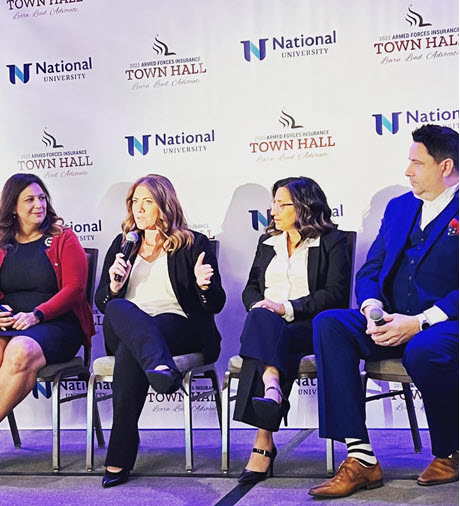
I am a Marine Corps veteran, a military spouse of more than 23 years, and a strategic consultant with experience at Deloitte and Apple. I specialize in helping organizations better understand and engage the military-connected community through brand strategy, workforce development, partnerships, and growth initiatives. I also serve as Chairwoman of the Military Spouse Advocacy Network, giving me a unique perspective that combines lived military experience with executive-level strategy. I'm passionate about building meaningful partnerships that create value for both businesses and the military community.
Tell us about a "typical" day in your professional life.
There really isn't a “typical” day in my professional life, and that's one of the things I enjoy most. My day usually starts with coffee, checking emails, and preparing for client meetings before jumping into strategy calls, workshops, or collaborating with teams to solve complex business challenges. Between meetings, I'm developing recommendations, researching emerging trends, or connecting with partners and stakeholders.
At the same time, my career exists alongside military life and raising three children, so flexibility is essential. I've learned to pivot quickly when military schedules change, school needs pop up, or life throws the unexpected my way. Balancing those responsibilities has made me adaptable, organized, and comfortable managing competing priorities while staying focused on delivering exceptional results for my clients.
What has been your biggest military spouse career struggle and how did you overcome it?
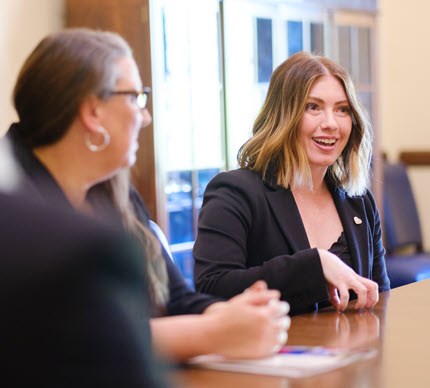
One of the biggest challenges I've faced throughout my career has been finding opportunities for upward mobility while remaining connected to the military spouse and military nonprofit space. The MSO/VSO ecosystem is filled with passionate leaders doing important work, but it can also be a small, relationship-driven community where leadership opportunities and influence don't always expand as quickly as the talent within it. That experience challenged me to look beyond traditional nonprofit pathways and develop skills in the private sector through consulting, technology, and strategy. In many ways, it pushed me to think bigger about how I could create impact—bridging government, nonprofits, and corporate organizations to bring fresh ideas and new partnerships to the military-connected community.
What role did mentors and sponsors play in your journey?
Mentors and sponsors have played an incredibly important role in my journey, though not always in the traditional sense. Some have been formal leaders who advocated for me professionally, while others were military spouses, veterans, colleagues, and friends who offered guidance, made introductions, or simply believed in me before I believed in myself.
I've also learned that sponsorship often comes from consistently showing up, doing excellent work, and building genuine relationships over time. Some of the biggest opportunities in my career—from Apple to Deloitte, leadership roles, and advocacy work—can be traced back to someone who was willing to open a door or recommend me for an opportunity.
Those experiences have shaped how I lead today. I believe we're all responsible for creating opportunities for others, especially military spouses who may not have the same visibility or stability as their civilian peers. Whenever I can make an introduction, mentor someone, or help expand someone's network, I do—because I know firsthand how life-changing one conversation or one advocate can be.
How does your career path differ from what you imagined for yourself?
If you had asked me 20 years ago where my career would be today, I never would have imagined this path. I assumed I would climb a fairly traditional career ladder, staying in one field and one location. Instead, military life taught me that careers don't always move in a straight line—and that's not necessarily a bad thing.
Every PCS, deployment, and new assignment required me to reevaluate my priorities. At different times, I chose to stay home with my children, homeschool, work remotely, return to school, or pursue new professional opportunities. While those decisions may have looked like detours from the outside, each one gave me new skills, perspectives, and relationships that I wouldn't have gained otherwise.
Today, I realize my career hasn't been defined by a single title or organization. It's been defined by adaptability, lifelong learning, and a willingness to reinvent myself when life called for it. Looking back, I wouldn't trade the unconventional path because it's given me experiences that allow me to connect with people, solve problems, and lead with empathy in ways I never could have imagined early in my career.
How did military life (PCSing, deployments, trainings, etc) factor into your career decisions?
Military life has influenced nearly every career decision I've made. Every PCS meant evaluating whether to continue in a role, start over, pursue additional education, or pause my career altogether. During some seasons, I prioritized flexibility so I could support my family through deployments, demanding assignments, and frequent moves. In others, I intentionally pursued opportunities that would continue building my skills, even if they looked different than a traditional career path.
Deployments, training cycles, and military assignments also shaped how our family made decisions together. During one assignment, we utilized delayed dependent travel due to our family's EFMP needs, allowing my children and me to remain behind while my husband reported to his new duty station. That decision provided important medical continuity for our family while also allowing me to maintain career stability and keep our children in their schools.
Rather than viewing military life as an obstacle, I've learned to see it as an opportunity to adapt and reinvent myself. I've earned degrees during transitions, worked remotely before it was common, homeschooled while building my career, and embraced new opportunities with every move. Those experiences have made me resilient, adaptable, and comfortable navigating change—qualities that continue to shape both my leadership style and my career today.
Have you ever had to geo-bach due to your career/entrepreneurship?
Yes. While many military families refer to it as “geo-baching,” our situation was technically a period of delayed dependent travel. Due to our family's EFMP enrollment and medical considerations, my children and I remained at our previous duty station while my husband reported to his new assignment in North Carolina. Remaining behind also provided important continuity for my career and stability for our children's education.
That season reinforced the reality that military families often make decisions based on the needs of the family as a whole—not just the military orders. It required intentional communication, flexibility, and a willingness to prioritize long-term family stability over being in the same location. While it wasn't an easy chapter, it allowed me to maintain career momentum while ensuring our children continued receiving the support and consistency they needed.
Looking back, it reminded me that there isn't a one-size-fits-all approach to military life. Every family has to weigh the tradeoffs, and sometimes the best decision is the one that provides the greatest overall stability, even if it means living apart for a season.
What resources have you found to be useful in your career/entrepreneur journey?
Throughout my career, my greatest resource has been my network. The military community is built on relationships, and mentors, fellow military spouses, veterans, and professional organizations have opened doors, offered guidance, and provided encouragement during every career transition.
Professionally, LinkedIn has been invaluable for building authentic connections and learning from others. Organizations like Hiring Our Heroes, the Military Spouse Advocacy Network, and the Military Spouse Employment Partnership have also provided meaningful opportunities to grow my leadership skills, expand my network, and stay connected to military spouse employment initiatives. My experiences at Apple and Deloitte have further shaped my perspective by exposing me to exceptional leaders, continuous learning, and opportunities to solve complex challenges.
Perhaps the biggest lesson I've learned is to never underestimate the power of asking for a conversation. Some of the most meaningful opportunities in my career have come from a simple introduction, a coffee chat, or someone willing to make a connection. Those relationships have been far more valuable than any single resource, and they continue to shape both my career and my passion for helping others do the same.
Final word: what are your top tips for other military spouses about navigating a career within the military lifestyle?
Navigating a career as a military spouse requires a mix of flexibility, intentionality, and self-advocacy. One of the most important lessons I've learned is to focus on building portable skills and experience that can move with you from duty station to duty station. Whether through remote work, certifications, freelance opportunities, or roles that value outcomes over location, prioritizing flexibility can help reduce the disruption that comes with PCS moves and unpredictable schedules.
Equally important is building and maintaining a strong network—both within and outside the military community. Every assignment is an opportunity to reconnect, rebuild, and expand your circle. Don't underestimate the power of other spouses, veteran communities, LinkedIn connections, and professional organizations. Many of my own opportunities have come from relationships built in unexpected places, and staying engaged even during transitions can make all the difference.
For those navigating the transition from military to civilian life—whether as a veteran, retiree, or spouse—be intentional about translating your experience. Military life builds leadership, adaptability, crisis management, and resilience, but those skills don't always speak for themselves in civilian terms. Take the time to reframe your story, invest in mentorship or career coaching if possible, and lean into veteran-friendly employers and programs that understand the value of your background.
Finally, give yourself grace through every season of change. Careers in the military lifestyle are rarely linear, and that's okay. Progress may look different at times, but consistency, curiosity, and a willingness to keep showing up will carry you forward.
| Listen to an interview with Jessica to hear more about her story. |
Tell Us YOUR Story |
Meet Spouses from Previous Weeks:














"The stories, experiences, and perspectives shared in these Military Spouse Highlights are provided by the individual contributors and reflect their personal views. While the National Military Spouse Network (NMSN) is honored to share and celebrate these voices, the content does not necessarily represent the views or endorsements of NMSN."