
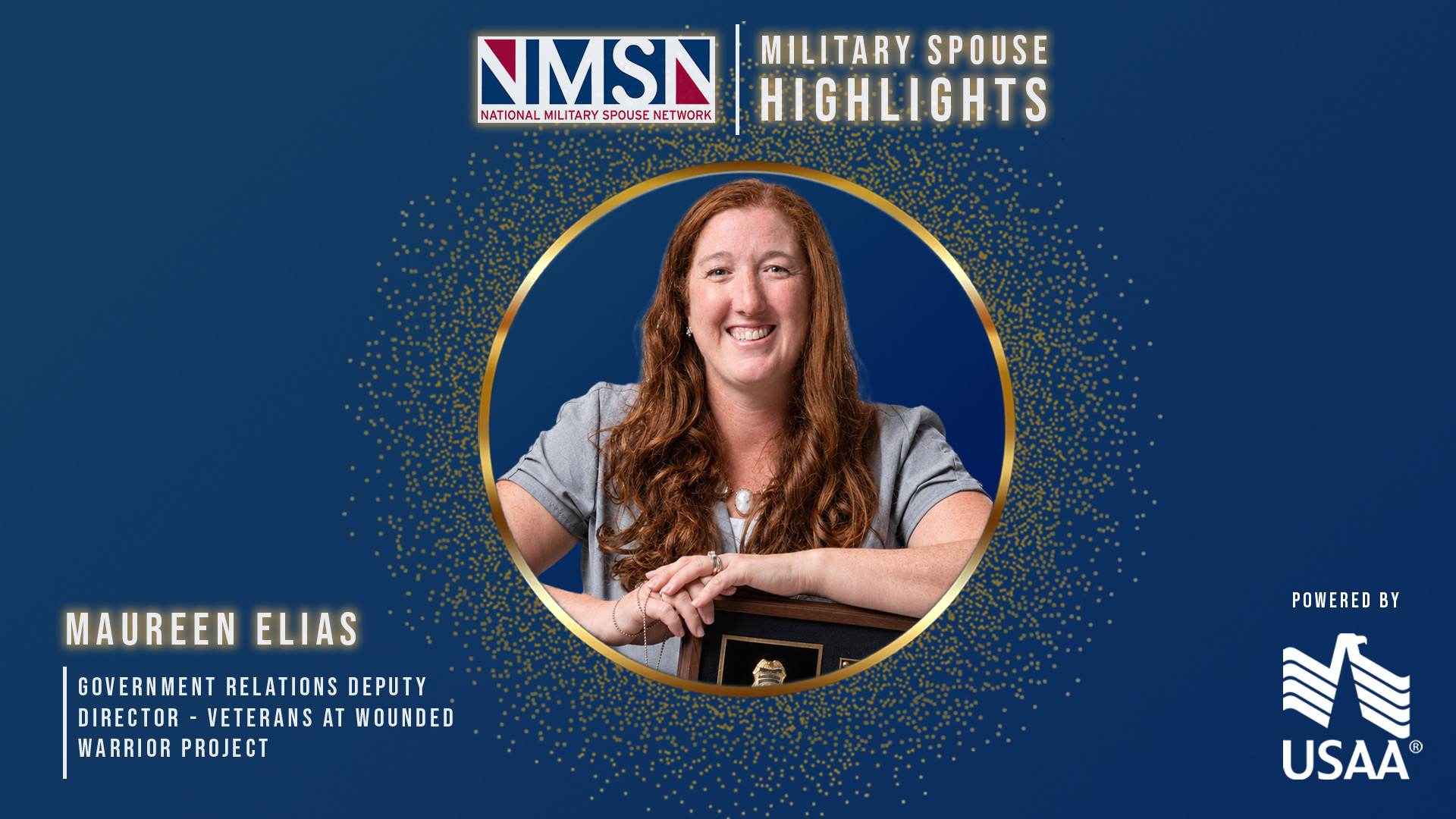
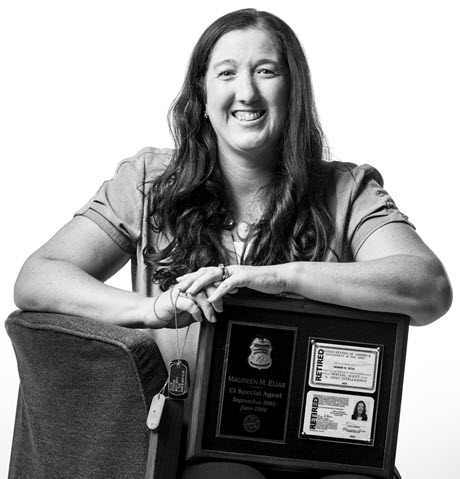
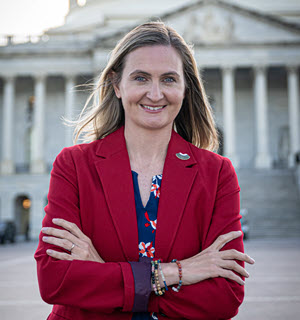
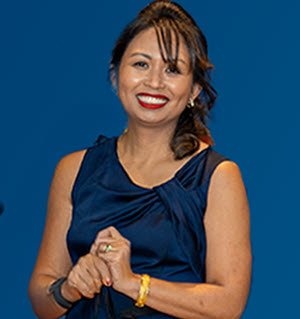
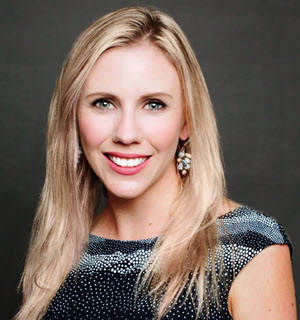
Maureen Elias
Government Relations Deputy Director - Veterans at Wounded Warrior Project
Service Member's Branch - Army
Service Member's Status - Retiree - 21 years and I served 5 ½ years before being medically discharged
 |
 |
 |
 |
What has been your military spouse career/entrepreneur journey so far?
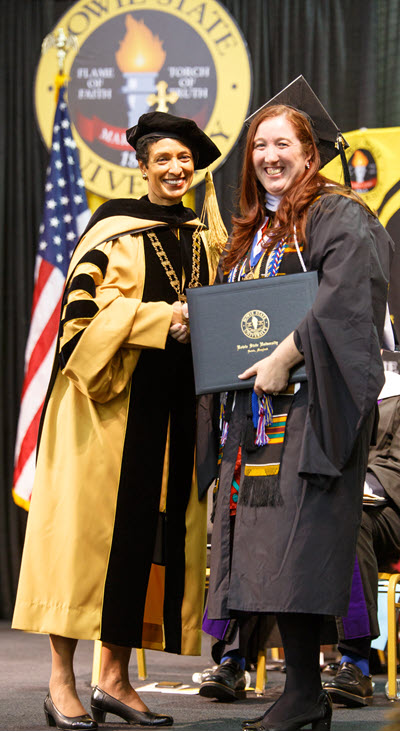
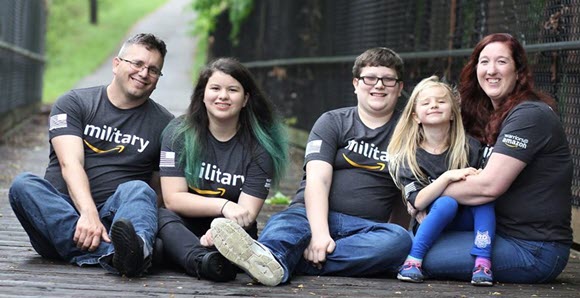
I met my husband while we were both at the Army's Advanced Individual Training, and four months later we were married. We served side by side for five years, balancing our careers with raising two children while stationed in Germany. I left active duty in 2006 after 5½ years as a counterintelligence agent, which is when I truly began my journey as a military spouse. For the next decade, I followed my husband's duty stations, raising our three children—each on the autism spectrum—while putting my own career on hold. Despite a top-secret clearance, a bachelor's degree, and fluency in Korean, the only job I could find was part-time gift wrapping at a department store. Eventually, I returned to school, not just for the degree but for the support it provided through the GI Bill, and there I discovered my passion for advocacy. That path led me from grassroots volunteerism to policy roles at two of the “big six” VSOs, then to the House Veterans' Affairs Committee, and later as a Biden appointee serving in senior leadership roles at the VA. Today, I continue that journey at Wounded Warrior Project, where I'm grateful to serve warriors and their families while pursuing my Executive MBA at Georgetown.
Tell us about yourself.
I'm an Army veteran and a proud military retiree spouse, so I've experienced the military journey from both sides. I'm also a mom of three amazing kids, and in my spare time I love taking my Jeep off-roading. My passion is helping veterans and their families navigate transition and find a meaningful path forward, and I do that through advocacy, mentoring, and connecting people with those who want to help. At the core, I'm a storyteller and love teaching others how to share their own stories as a way to build connection and purpose.
Tell us about a "typical" day in your professional life.
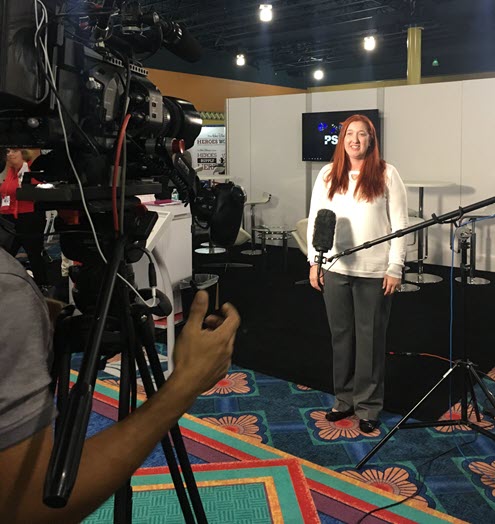
A typical day in my life balances family, advocacy, and education. I start the morning with my kids and husband, then spend my day in Washington, D.C. as Deputy Director of Government Affairs at Wounded Warrior Project. This looks like meetings with my team to see which members of congress they will be speaking with and why and continuing to work on our strategic goals to help advance policies that improve the lives of veterans and their families. Evenings are family time, followed by a couple of hours of homework as I work toward my Executive MBA at Georgetown. It's a full schedule, but each part connects to my passion for service, growth, and helping others find their path forward.
If you've been stationed overseas, how did this affect your career and or business?
When we were stationed overseas, I was still in the Army so it didn't impact my career.
What has been your biggest military spouse career struggle and how did you overcome it?
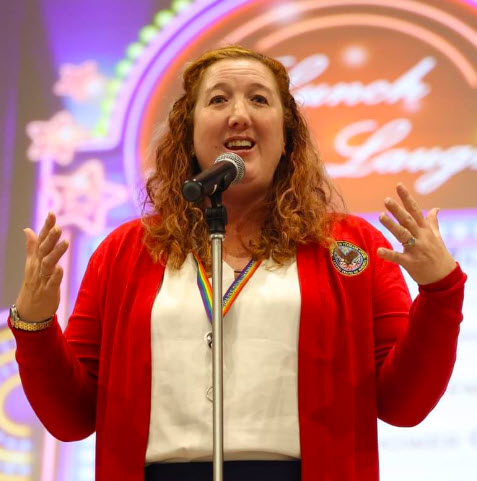
My biggest struggle as a military spouse has been the loneliness that comes with moving so often. Each time, I would work hard to build friendships and community, only to have to start over again when we moved—and just as painful, to say goodbye to people who had become like family. There was also the frustration of having no control over where we went or when we had to go, which left me constantly rebuilding a life from scratch. On top of that, when I took off the uniform and shifted fully into the role of spouse, I suddenly felt invisible, as if my experiences, my service, and my voice no longer mattered. At the same time, I was raising three children on the autism spectrum at a point when autism wasn't the household word it is today, often while my husband was deployed or away for training. It was an isolating season, but those challenges also taught me resilience, creativity, and the importance of finding or building networks of support.
What role did mentors and sponsors play in your journey?
Mentors and sponsors have been absolutely essential in my journey. Kristofer Goldsmith and Tom Berger took a risk on me by selecting me as a High Ground Veteran Advocacy Fellow, giving me my first opportunity to learn how to be a national advocate. Jayson Browder prepared me for leadership through the Veterans in Global Leadership Fellowship. My dear friend Kayla Williams encouraged me to find and use my voice - opening doors for me, while Tammy Barlet has consistently pushed and supported my personal and career growth. Jared Lyon has been a trusted guide, and Nona Bear has played an important role in shaping and supporting my path. Pat Tufinov has helped prepare me for new levels of leadership. Each of them has invested in me in ways that not only advanced my career but also strengthened my confidence and commitment to serving veterans and their families. I hope to pay forward the kindness and support I was given as a new advocate to others wishing to do the same.
How does your career path differ from what you imagined for yourself?
In all honesty, I never thought I would have a career after leaving the military—and I found that realization horribly depressing. I adore my kids and love raising them, but I missed working and for years I couldn't imagine what a professional path might look like for me. When I finally went back to school, I thought I'd become a therapist, so shifting into advocacy was a surprise. Sometimes my career has felt a little like a squirrel crossing the road—zigs and zags along the way—but every choice I've made has been intentional. At one point I even flew from Los Angeles to D.C. every week to keep serving as a national veterans' advocate. And when my husband was stationed in California, despite my pleas for an East Coast post so I could keep my role, the branch manager shrugged and said, ‘I'm sure there's a daycare in California.' It hasn't been the straight path I once imagined, but it's been one of purpose, persistence, and passion.
How did military life (PCSing, deployments, trainings, etc) factor into your career decisions?
Military life shaped nearly every career decision I made. With constant moves, deployments, and trainings, I often put my own career on hold to keep our family steady. Each PCS meant starting over—new schools for my kids, new doctors, new communities—and often losing the professional momentum I had built. The lack of control over where or when we moved was frustrating, especially while raising three children on the autism spectrum, often on my own while my husband was away. When I finally found my calling in national advocacy, the career couldn't travel with me—so I made the hard choice to leave my family each week and fly across the country to pursue it. That season was painful, but it also taught me resilience, focus, and how to build a career with intention, even when the odds weren't in my favor.
Have you ever had to geo-bach due to your career/entrepreneurship?
Yes, we've had to geo-bach multiple times during my husband's career, and it's never easy. One of the biggest lessons I learned is to show up for the moments that matter—school plays, end-of-year parties, sports events—because when one parent is gone, the other often has to play double duty. Make time to connect with family whenever you can, and when you're present, be fully present—listen to your spouse and kids with the same intentionality you'd give an ops briefing from a commander. If you're the one away, don't complain about being bored; chances are, your spouse at home is running on fumes. And when you reunite, fold yourself into their lives rather than expecting them to bend around yours. For the spouse holding down the fort, it helps to keep your partner included—send photos and videos, keep talking, and ask for their input. It's easy to slip into ‘go mode' and do everything yourself, but that can leave your partner feeling alienated or unneeded. Geo-baching is tough, but with intentional communication and presence, you can come through it stronger as a family.
What resources have you found to be useful in your career/entrepreneur journey?
There are so many resources out there, and my best advice is to research them carefully—because while many are excellent, unfortunately there are also scammers and bad actors. Student Veterans of America is one I highly recommend for anyone using VA education benefits; their programming was incredibly valuable to me. If you have VA benefits through your own or your spouse's service or disability, use them. Also check what your state offers—my two older children, for example, are attending school tuition-free in Virginia thanks to the Virginia Military Survivors & Dependents Education Program. Beyond formal programs, the military spouse network is strong, and tapping into it has been a lifeline. As a milspouse, you bring so many desirable skills to the table, but sometimes you have to help an employer see that. Don't be afraid to sing your own praises—you've earned them.
If you and/or your spouse have transitioned from active duty to your current status, what resource or tool did you find to be the most helpful?
The most important resource when you or your spouse transition is to take advantage of the veteran service organizations that will help you file a disability compensation claim for free. Sadly, there are bad actors out there charging money to do this, so it's critical to know you don't have to pay. Trusted organizations like Wounded Warrior Project, DAV, VFW, and many others are ready to stand by you in the process. You can find a reputable accredited representative through this VA tool: https://www.va.gov/get-help-from-accredited-representative/find-rep/
Final word: what are your top tips for other military spouses about navigating a career within the military lifestyle?
My top tip is to give yourself grace—your career path may not be linear, and that's okay. Every PCS, deployment, or training cycle comes with tradeoffs, but each chapter also builds resilience and skills that employers truly value. Tap into the military spouse network—it's strong, generous, and can open doors you didn't know were there. Do your research before signing onto programs or offers, because while there are excellent resources, there are also bad actors. If you or your spouse are transitioning, lean on reputable veteran service organizations to help with benefits and claims, and don't be afraid to use the state and federal resources available to your family. Remember too that transition can stir up a lot of emotions—you, your spouse, and your kids are all going through an identity change. If you have access to counseling, I highly recommend it as you navigate this season. Above all, know that your experiences, both in and out of uniform, matter. You bring initiative, adaptability, and grit to the table—so don't be afraid to speak up for yourself and claim the career and life you want.
| Listen to an interview with Maureen to hear more about her story. |
Tell Us YOUR Story |
Meet Spouses from Previous Weeks:
















"The stories, experiences, and perspectives shared in these Military Spouse Highlights are provided by the individual contributors and reflect their personal views. While the National Military Spouse Network (NMSN) is honored to share and celebrate these voices, the content does not necessarily represent the views or endorsements of NMSN."