
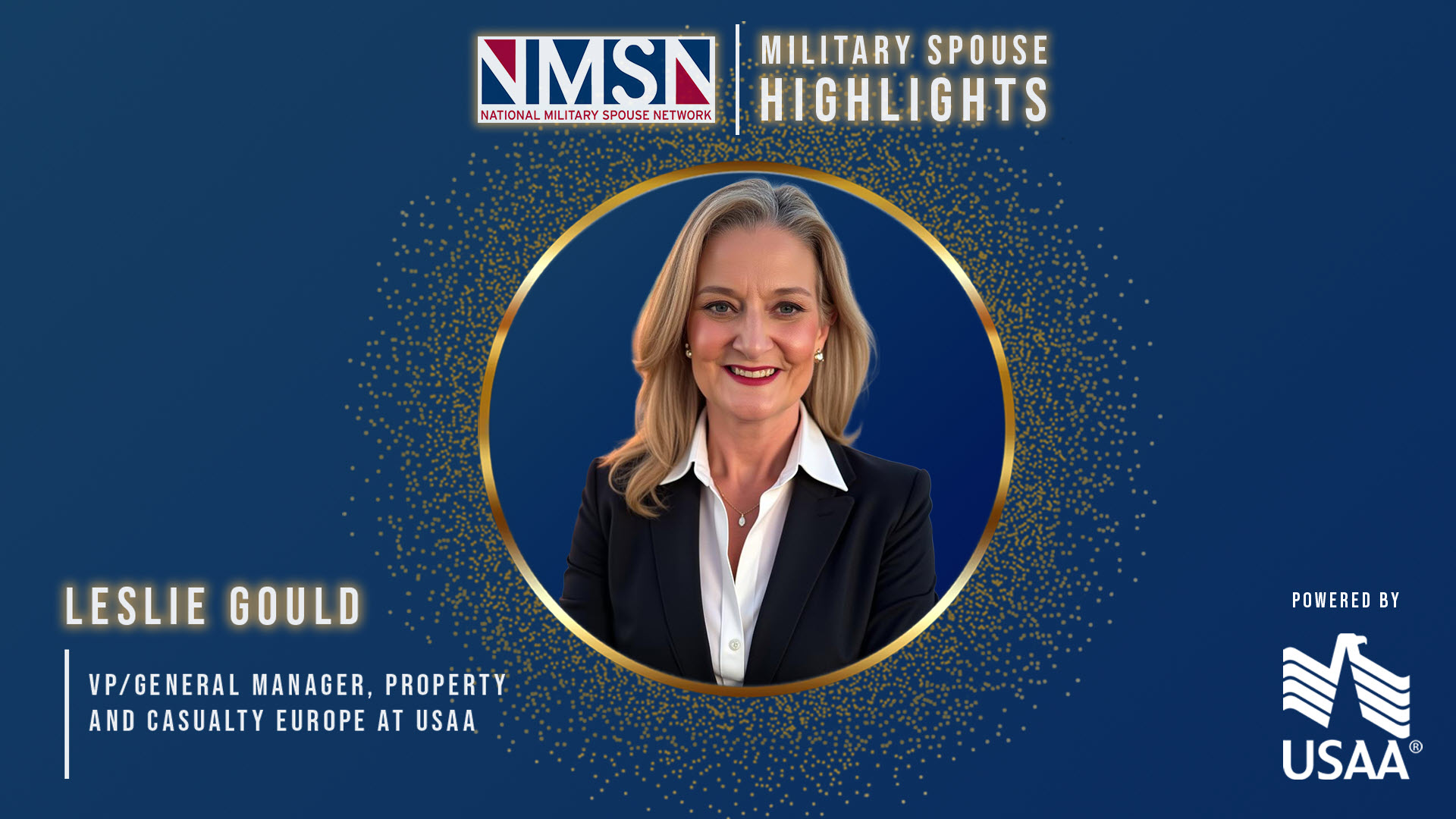
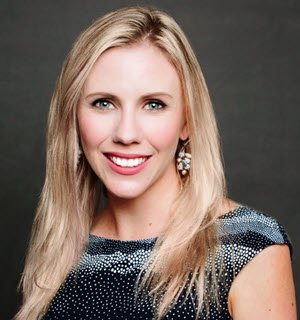
Leslie Gould
VP/General Manager, Property and Casualty Europe at USAA
Service Member's Branch - Navy
Service Member's Status - Retiree - 28 years
 |
 |
 |
What has been your military spouse career/entrepreneur journey so far?
For more than 23 years, I have built and sustained a professional career while navigating the unique realities of life as a military spouse. Throughout those years, I experienced firsthand the challenges military spouses face in pursuing meaningful employment while supporting a service member's career—including frequent relocations, career interruptions, rebuilding professional networks, and repeatedly establishing credibility in new communities and organizations. Rather than allowing those transitions to define the limits of my career, I learned to adapt, lead, and continue moving forward, ultimately progressing into senior executive leadership. That journey has given me a deeply personal understanding of both the extraordinary talent military spouses bring to the workforce and the systemic barriers that can make sustaining a career unnecessarily difficult. Today, I bring those 23 years of lived experience together with my professional leadership background to advocate for policies, employer practices, and opportunities that enable military spouses not simply to find jobs, but to build lasting, meaningful careers of their own.
Tell us about yourself.
My name is Leslie Gould and I'm from Memphis, TN. I have been a military spouse for 23 years, have lived among and worked for the Navy for over 18.5 years before accepting my new role with USAA. I enjoy hiking, traveling, SCUBA, quilting, and spending time with my husband Jake and my min pin Callie.
Tell us about a "typical" day in your professional life.
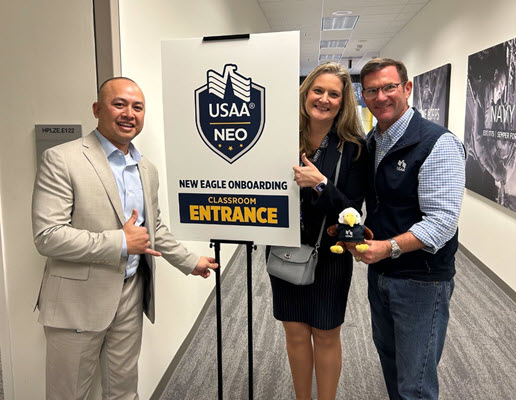
A typical day in my professional life involves working in the property and casualty division for USAA where I will be overseeing our European operations to serve our members who serve overseas and are in PCS status with their families. We strive to ensure our members achieve financial security and that USAA is their number-one choice.
If you've been stationed overseas, how did this affect your career and or business?
My experience as a military spouse has taken me to more than 50 countries, including four years living in Italy and four years in Guam. Living overseas had a significant impact on my career, requiring me to navigate employment limitations, geographic isolation, licensing and hiring challenges, and the realities of rebuilding professional networks while continuing to support the demands of military service. At the same time, those experiences became an important part of my professional development. Working and living across different cultures strengthened my adaptability, resilience, cultural awareness, and ability to build relationships across diverse communities. I learned how to maintain career momentum despite circumstances that were often outside of my control and how to view each transition as an opportunity to develop new skills and perspectives. Those eight years living outside the continental United States, combined with experiences across more than 50 countries, ultimately broadened my understanding of the global military community and the unique employment challenges military spouses face—particularly those stationed overseas. That perspective continues to influence how I lead and advocate for military spouses and their ability to build sustainable, portable careers regardless of where military service takes their families.
What has been your biggest military spouse career struggle and how did you overcome it?
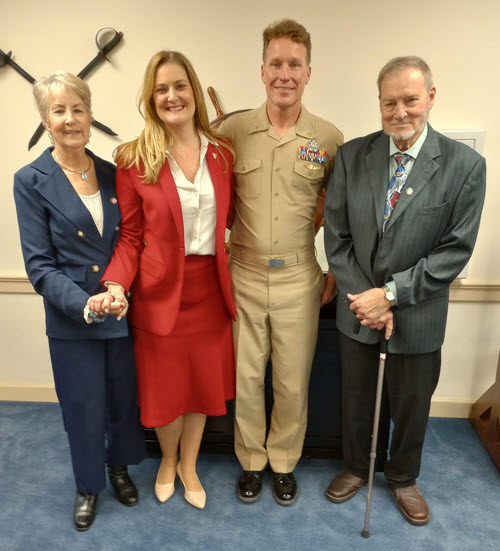
My biggest career struggle as a military spouse has been having to start over—again and again. Each military move brought a new community, a new professional network, and often the challenge of proving myself all over again, regardless of the experience or success I had achieved at the previous duty station. Over time, I realized that while I could not control where the military sent our family, I could control how I prepared myself for the next opportunity. Education became one of the most important tools in that journey. I pursued multiple degrees and continued building my credentials, and today I am pursuing my PhD. Just as importantly, I learned how to reinvent myself professionally without losing the value of everything I had accomplished before. I became more intentional about translating my skills across industries, building relationships quickly, and viewing each transition as an opportunity to grow rather than simply another career disruption. My military spouse journey taught me that career resilience is not about following a perfectly linear path; sometimes it is about having the courage and preparation to create a new path every time circumstances require you to begin again.
What role did mentors and sponsors play in your journey?
Mentors and sponsors have played an incredibly important role throughout my career, particularly as a military spouse whose professional journey was rarely linear. With each move and career transition, mentors helped me see possibilities I sometimes could not see for myself. They provided advice, perspective, and encouragement as I navigated new organizations, pursued additional education, and continued to reinvent myself professionally. Sponsors played an equally important—but different—role. They did more than provide guidance; they advocated for me when I was not in the room, opened doors to opportunities, and were willing to put their credibility behind my potential. As a military spouse, those relationships were especially valuable because frequent moves often meant leaving established professional networks behind and rebuilding them somewhere new. My journey has taught me that we need both mentors who help us determine where we want to go and sponsors who are willing to help us get there. Their investment in me also created a responsibility that I take seriously today: to reach back, mentor and sponsor others, and use my own position and influence to create opportunities for the military spouses and emerging leaders coming behind me.
How does your career path differ from what you imagined for yourself?
I always imagined that one day I would become a CEO or lead an organization, but I certainly did not envision the path that would take me there. As a military spouse, my career was rarely a straight line. It included moves, overseas assignments, career pivots, continued education, and many moments when I had to reinvent myself and begin again. Along the way, however, I was given the opportunity to fulfill much of that original dream through my leadership of the Navy's Quality of Life programs, where I was entrusted with responsibilities that allowed me to lead complex operations and make a meaningful difference in the lives of service members and their families. Today, that dream has evolved even further as I step into my new role as Vice President and General Manager of USAA's European operations. In many ways, I am arriving at the destination I envisioned for myself years ago—just by a very different route. My military spouse journey did not prevent me from pursuing my aspirations; it reshaped the path I took to reach them. Looking back, the unexpected turns, sacrifices, education, and reinvention have made me a stronger and more empathetic leader and have given me a perspective I could never have gained from a perfectly planned career.
How did military life (PCSing, deployments, trainings, etc) factor into your career decisions?
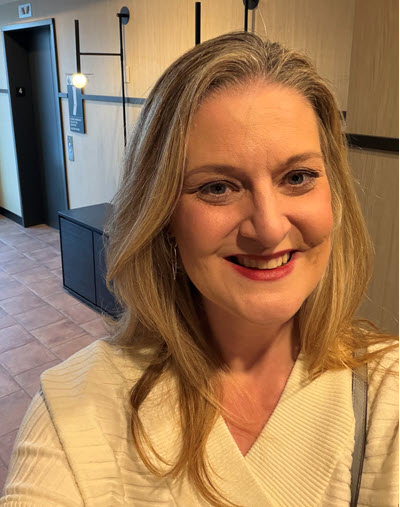
Military life was one of the most significant factors shaping my career decisions. PCSing, deployments, extended trainings, and the uncertainty that comes with military service meant that I could never assume the career opportunity in front of me would remain available in the same place for the long term. Instead, I learned to continually retool, rethink, and reinvent myself. I became intentional about pursuing education, professional development, and new skills that could travel with me and remain valuable regardless of our next duty station. Rather than building my career around a single position or a perfectly linear progression, I focused on continually becoming better prepared for whatever opportunity came next. That mindset ultimately became one of my greatest professional strengths. Military life taught me to be adaptable, comfortable with change, willing to learn, and unafraid to begin again. Looking back, the disruptions that could have limited my career instead motivated me to keep pursuing education and betterment, eventually leading me to pursue my PhD [1.1]and helping prepare me for leadership opportunities I could not have imagined at the beginning of my military spouse journey.
Have you ever had to geo-bach due to your career/entrepreneurship?
Yes, I have geo-bached several times and my husband was deployed 80% of the time in our first four years of marriage while we were stationed in Italy. He's lived in Bahrain while I pursued my Navy career in DC from Program Manager to Senior Executive. He's also lived in California so I could become the QOL deputy director for the Navy in DC. All these things and separations only made us stronger and more resilient.
What resources have you found to be useful in your career/entrepreneur journey?
Title 35 benefits so I could pursue my PhD. Family Support Programs in QOL from the services to help me navigate the government employment world. Organizations like NMCRS, USAA, and MFAN helped with deployment and other resources we needed as a family.
If you and/or your spouse have transitioned from active duty to your current status, what resource or tool did you find to be the most helpful?
USAA transition support for insurance. VA Title 35 benefits navigation.
Final word: what are your top tips for other military spouses about navigating a career within the military lifestyle?
My first piece of advice to other military spouses is to **invest in yourself continuously**. Military life will change your plans—sometimes with very little notice—but education, skills, credentials, relationships, and experience belong to you and travel with you. Second, do not be afraid to reinvent yourself. A PCS, deployment, overseas assignment, or career interruption may require a different path, but starting something new does not mean starting from zero; you carry everything you have learned and accomplished forward with you. Third, build and maintain your network, especially mentors and sponsors. Military spouses become incredibly skilled at building relationships, but we also have to be intentional about maintaining those relationships when we move. Fourth, learn how to articulate the value of the military spouse experience. Adaptability, resilience, cultural competence, problem-solving, independence, and the ability to operate through uncertainty are genuine professional strengths.
For spouses navigating military retirement or separation, I would add: **prepare for the transition before it arrives**. Give yourself permission to pursue opportunities that may not have been possible during active-duty life. Continue your education, reconnect with your professional network, seek mentors and sponsors, and be willing to take a calculated risk on yourself. Most importantly, do not measure your career against someone else's linear path. My own career required me to retool, rethink, pursue additional education, and reinvent myself many times. The path may look different, but different does not mean less successful. Sometimes the career you build through all of those transitions becomes far greater than the one you originally imagined.
| Listen to an interview with Leslie to hear more about her story. |
Tell Us YOUR Story |
Meet Spouses from Previous Weeks:























"The stories, experiences, and perspectives shared in these Military Spouse Highlights are provided by the individual contributors and reflect their personal views. While the National Military Spouse Network (NMSN) is honored to share and celebrate these voices, the content does not necessarily represent the views or endorsements of NMSN."