
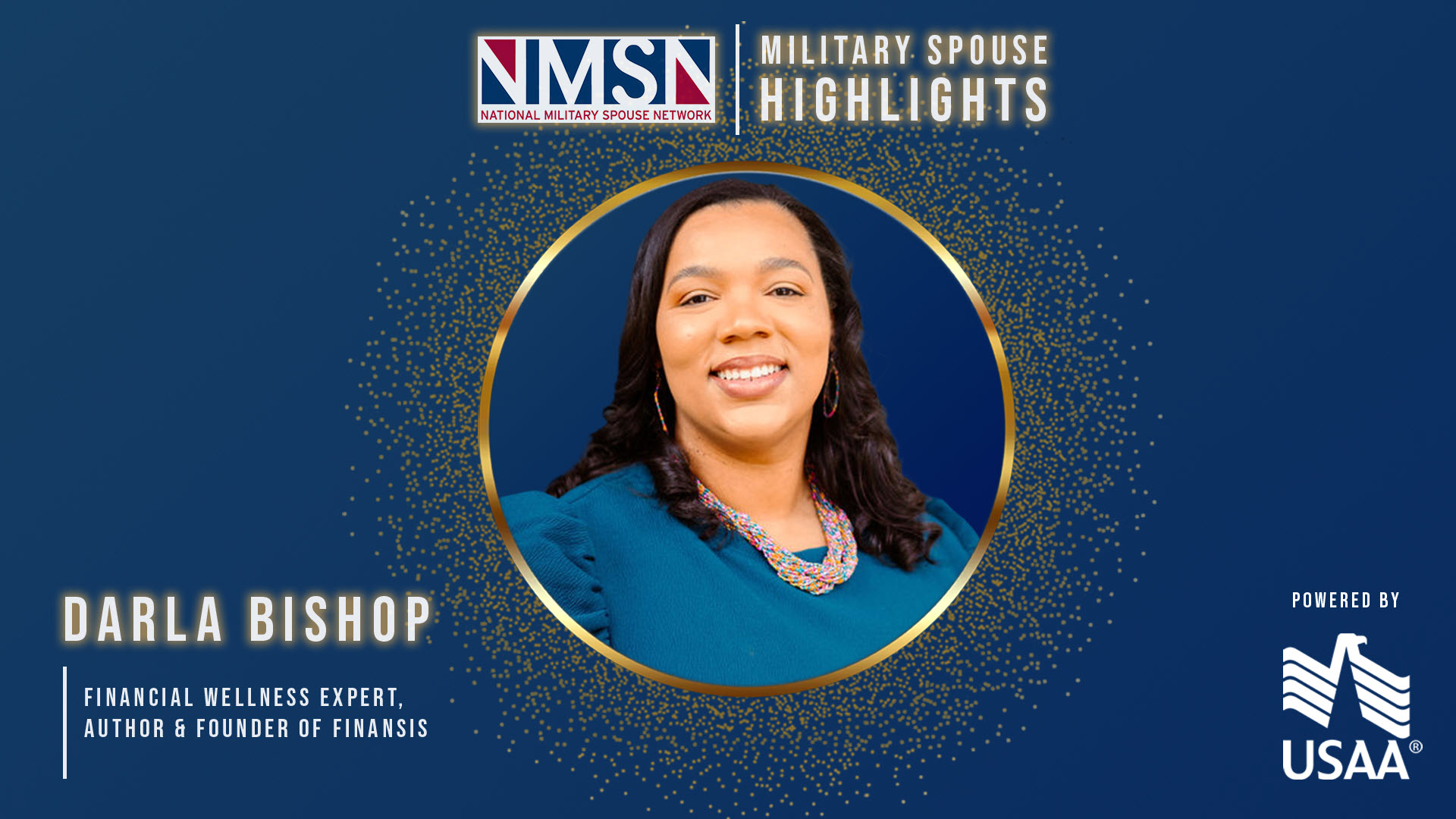
Darla Bishop
Financial Wellness Expert, Author & Founder of Finansis
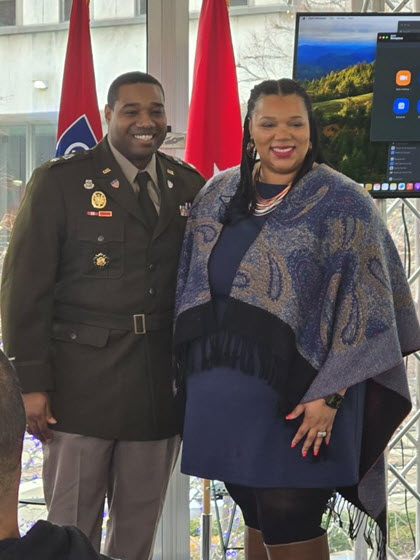
Service Member's Branch - Army National Guard
Service Member's Status - Currently Serving - 19 years
 |
 |
What has been your military spouse career/entrepreneur journey so far?
Military life started rearranging my plans before I was technically even a military spouse. Our wedding was scheduled for July 13, 2013, but when my husband received orders that March, we got legally married at the courthouse on a Friday so I could move with him from Michigan to the National Capital Region. I left my job in academic research at the University of Michigan, applied to nearly 200 jobs, and eventually took an unpaid internship on Capitol Hill. In 2014, just as I was accepted into the DrPH program at George Washington University, another set of orders came. I planned to follow him back to Michigan, but my employer offered me a 30% raise and flexible work to stay, so we made the difficult decision to live apart while I continued my career and doctorate. We finally reunited under one roof in 2017, and the moves kept coming: back to the National Capital Region in 2019, Lansing in 2021, and Northern Virginia in 2026. By the time I earned my doctorate in 2022, those eight years had included seven moves, nine job changes, and two babies. After graduation, I finally finished the personal finance book I'd been thinking about for years, and How to Afford Everything eventually led me to start FinanSis in 2023. What began as a business I needed to collect book revenue has grown into financial wellness speaking, workshops, books, curriculum, and Piggy Bank Pathways, our financial education program for children and families.
Tell us about yourself.
I'm Dr. Darla Bishop, a financial wellness expert, author, entrepreneur, public health professional, wife, and mom of two. I'm originally from Michigan, but after more than a decade as an Army spouse, the National Capital Region has become a second home, and our family recently returned to Northern Virginia. I love traveling, learning new things, and finding practical ways to make life, money, and work make a little more sense. I often joke that being a military spouse means I've lived about 17 different lives, and somehow I've found a way to use pieces of all of them in the work I do today.
Tell us about a "typical" day in your professional life.
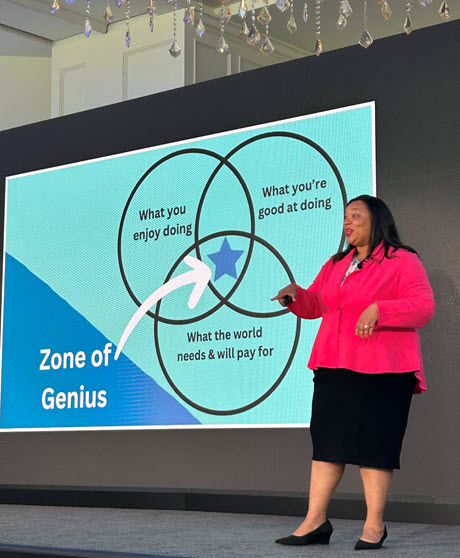
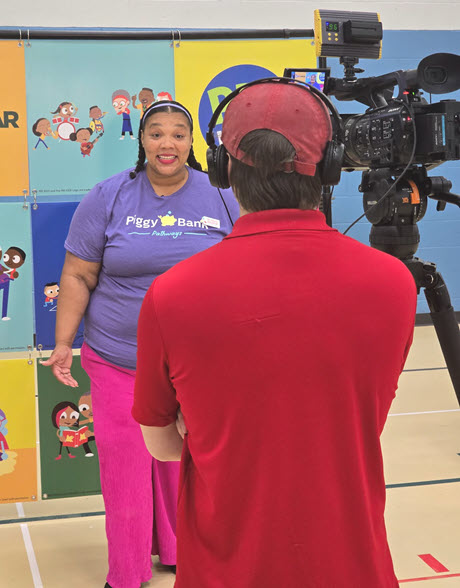
I'm not sure I have a typical day, which is probably fitting for a military spouse! My professional life sits at the intersection of public health, financial wellness, education, and entrepreneurship. On any given day, I might be leading work in my healthcare career, preparing for a speaking engagement, working with my team on FinanSis, developing financial education programming through Piggy Bank Pathways, or talking with a school, financial institution, or community organization about a partnership. I've learned that I really enjoy having a portfolio career. The variety allows me to use different parts of my experience and, perhaps most importantly for military life, gives me more than one way to keep moving forward when circumstances change.
What has been your biggest military spouse career struggle and how did you overcome it?
My biggest career struggle has been learning that being able to take your work with you is not the same thing as being able to take your career with you. Every PCS has meant rebuilding something: finding a new job, learning a new market, rebuilding relationships, finding childcare, or figuring out how two ambitious people can keep moving forward when the Army decides where one of them needs to live. Over time, I responded by building more options into my career. I developed skills that transfer across industries, finished my doctorate, built relationships beyond any one employer or city, and eventually created a business and intellectual property that could move with me.
Our 2026 move from Michigan back to the National Capital Region taught me that even entrepreneurship doesn't make you completely portable. FinanSis could move. My books could move. My clients and ideas could move. But the ecosystem we had spent years building around our family and my work couldn't simply be packed into a box. There were trusted relationships, schools, community partners, childcare, routines, and a local reputation that all had to be rebuilt. I've stopped thinking of each move as “starting over.” I carry everything I've learned and built with me, and I've gotten much better at identifying what is worth rebuilding, what can evolve, and what I'm ready to leave behind.
What role did mentors and sponsors play in your journey?
Mentors and sponsors have been incredibly important, especially because military life can interrupt the professional relationships that normally grow from staying in one place for a long time. I've learned to intentionally build a network that isn't dependent on my ZIP code. Mentors have helped me see possibilities I couldn't always see for myself, while sponsors have said my name in rooms I wasn't in and connected me to opportunities that helped me grow. As an entrepreneur, programs like Warrior Rising have been especially valuable because they gave me not only business training, but a community of veterans and military spouses who understand what it means to build something while military life keeps changing the circumstances around you. One of the biggest lessons of my career has been that you don't have to figure everything out alone, and you shouldn't try.
How does your career path differ from what you imagined for yourself?
I thought I would have a much more traditional career. I studied public health and imagined I would find a good organization, become increasingly senior in my field, and build a career in a fairly straight line. Military life cured me of that idea pretty quickly. 😂
A mentor, Patti Poppe, who was then President and CEO of Consumers Energy, gave me a framework that completely changed how I thought about my career. She encouraged me to think about the difference between a “destination career” and an “interesting assignment career.” A destination career is focused on reaching a particular title or professional endpoint. An interesting assignment career is about asking, “What interesting, meaningful work can I do next, and what can I learn from it?” I realized I was building the latter.
That mindset has taken me from academic research to Capitol Hill, healthcare, higher education, financial education, speaking, writing, and entrepreneurship. For a long time, I worried that all of those pivots made my career look scattered. Now I see that each interesting assignment gave me skills, relationships, and perspective that I carried into the next one. I didn't get the linear career I originally imagined, but I built one that is more resilient, more interesting, and uniquely mine.
How did military life (PCSing, deployments, trainings, etc) factor into your career decisions?
Military life has factored into almost every major career decision I've made, even when it wasn't obvious from the outside. I've turned down opportunities because the timing didn't work, chosen jobs based on flexibility, negotiated remote work before it was common, and spent nearly three years geographically separated from my husband because moving at that particular moment would have meant walking away from both a great job and my doctoral program.
Military life is also one of the reasons I came to understand money as a tool for creating options. Money has often been the bridge across the gaps military life creates. A PCS can mean two housing payments for a period of time, unexpected childcare, travel, lost income, or needing to make a career decision before you know exactly what comes next. Sometimes money has bought us time. Sometimes it has bought childcare or a plane ticket. And sometimes having financial breathing room has allowed me to say no to the wrong opportunity while I waited for the right one.
That experience has shaped both the way I manage my own career and the financial wellness work I do today. I'm much less interested in telling people to simply “budget better” than I am in helping them build enough financial flexibility to navigate real life. For military families especially, we know change is coming even when we don't know exactly what that change will be. I want money to give my family more choices when it does.
Have you ever had to geo-bach due to your career/entrepreneurship?
Yes, for nearly three years. When my husband received orders to Michigan in late 2014, I had just been accepted into the DrPH program at George Washington University. I initially planned to join him in 2015, but my employer offered me a 30% raise and greater flexibility to stay. We decided that, for that season, protecting the momentum I had built in my career and education was worth living apart. I stayed in the DC area until July 2017.
My biggest advice is to treat geo-baching as a family strategy, not one spouse choosing a career over the family. Be very clear about what you are protecting or working toward, how long you are willing to do it, how often you will see each other, and what would cause you to change the plan. And talk honestly about the money. Maintaining two households and traveling between them can get expensive quickly, so the professional benefit has to be weighed against the financial and personal cost.
Most importantly, don't assume the “supportive” choice is always for the military spouse to leave their opportunity behind. Sometimes supporting your family means protecting both careers and accepting an unconventional arrangement for a season. Geo-baching wasn't easy for us, but it allowed me to continue my doctoral coursework and build professional momentum that has benefited our family long after we reunited under one roof.

What resources have you found to be useful in your career/entrepreneur journey?
I've learned to think about resources pretty broadly. Sometimes the most valuable resource is a formal program, and sometimes it's a person who helps you see your next move differently. Organizations like Warrior Rising and the Association of Military Spouse Entrepreneurs (AMSE) have helped me build community and business skills with people who understand the realities of military life. I've also benefited tremendously from mentors, professional associations, accelerators, and entrepreneurship programs outside the military community. Those connections matter because I don't want my professional network to exist only within the military spouse ecosystem.
I'm also a huge believer in investing in your own portable professional capital: credentials, skills, relationships, intellectual property, and a reputation that you can carry from one duty station to the next. My doctorate, books, speaking experience, and the relationships I've built across different industries have all become resources I can draw on regardless of where we live.
Finally, I'd tell military spouses not to overlook the resources that create capacity. Childcare, savings, a good accountant, technology, and paid help may not look like “career development,” but sometimes the resource that makes the next opportunity possible is simply having enough time, money, or support to say yes to it.
Final word: what are your top tips for other military spouses about navigating a career within the military lifestyle?
My biggest advice is to stop measuring your career against a path that was designed for people who get to stay in one place.
A mentor, Patti Poppe, once helped me distinguish between a destination career and an interesting-assignment career, and that framework changed how I thought about my own path. A destination career is built around reaching a particular title or position. An interesting-assignment career asks: What is the most interesting, meaningful thing I can do in this season, and what will it teach me or prepare me to do next? Military life has made the second approach much more useful for me.
Build things you can take with you: skills, credentials, relationships, a strong reputation, intellectual property, and financial flexibility. I think of those things as portable professional capital. Your address may change. Your employer may change. Your plan will almost certainly change. But you do not have to start from zero every time.
And pay attention to your money. Military spouses are often told to build portable careers, but I think we also need portable financial power. Savings and financial flexibility can give you the ability to survive a gap in employment, pay for childcare during a transition, maintain two households temporarily, invest in training, or wait for the right opportunity instead of taking the first one available. Money cannot eliminate the disruption of military life, but it can give you more choices in how you respond to it.
Finally, give yourself permission to build a career that looks interesting on paper rather than perfectly linear. Mine has included academic research, Capitol Hill, healthcare, teaching, public health, writing, speaking, and entrepreneurship. At various points, that felt scattered. Looking backward, I can see the through line.
Military life may require you to begin again. That does not mean you are starting over. Take what you've built with you.
| Listen to an interview with Darla to hear more about her story. |
Tell Us YOUR Story |
Meet Spouses from Previous Weeks:








"The stories, experiences, and perspectives shared in these Military Spouse Highlights are provided by the individual contributors and reflect their personal views. While the National Military Spouse Network (NMSN) is honored to share and celebrate these voices, the content does not necessarily represent the views or endorsements of NMSN."