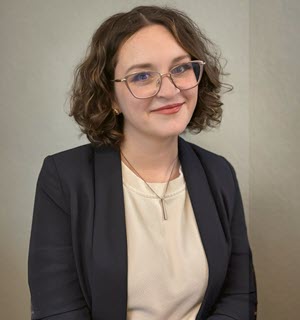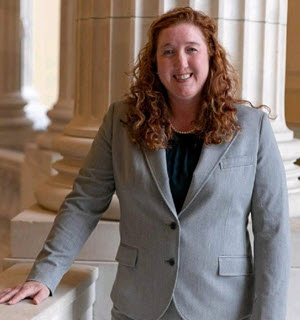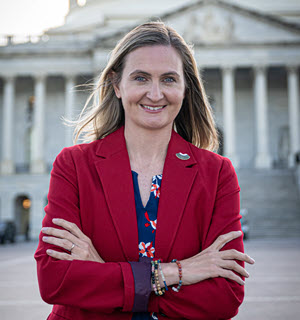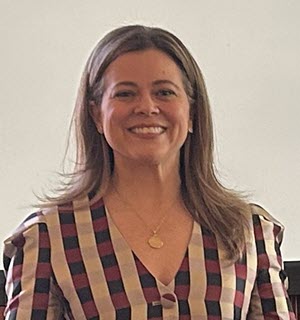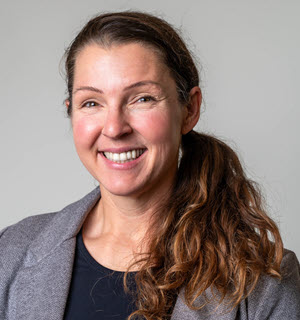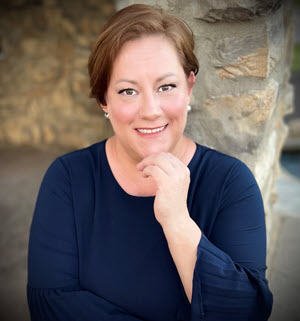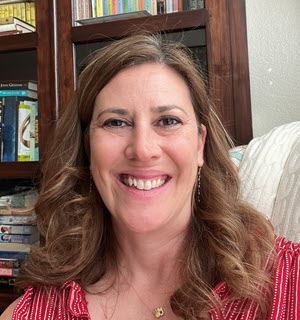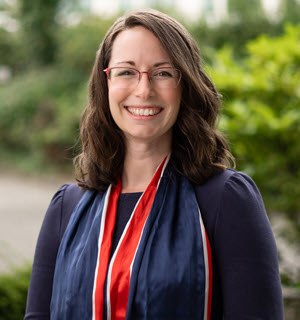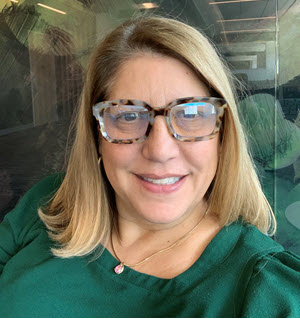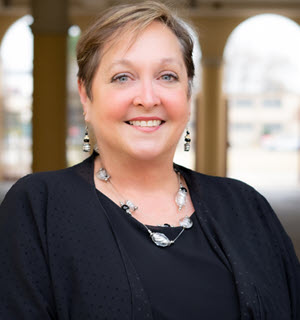
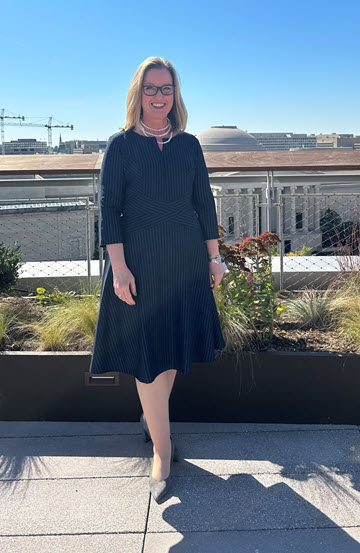
Shelley Kimball
Associate communication program director and senior lecturer at Johns Hopkins University
Service Member's Branch - Coast Guard
Service Member's Status - Retiree - 28 years
 |
 |
 |
What has been your military spouse career/entrepreneur journey so far?
I met my husband while I was in graduate school. I had been a newspaper reporter, and I was working on a Ph.D. in mass communication. I assumed that I would always find a teaching job, and I did not give any other possibilities a thought.
At our first duty station, I found a teaching position at a great university. But at our second and third duty stations, I could not always find teaching jobs, and trying to manage that with childcare became a huge obstacle.
By our fourth move, I found my perfect job, a tenure-track position in my field with a faculty and student body I loved, and a school and childcare system that my kids loved, and the inevitable happened. We got orders. This transfer was for my husband's dream job -- a command position in another state. I had to make the difficult choice that faces so many military spouses, and I left my job.
Unfortunately, there was a hiring freeze on faculty in the state to which we were moving. I had fallen right back to the bottom of the ladder. This time, I couldn't even find the ladder. It was my lowest point, but it was also the point at which I made the biggest career decision that paid off in ways I never would have expected.
I reframed my idea of myself and my work. I thought instead about my skill sets, not the usual career path in academia. I began conducting research for military family nonprofits. I continued this work for about 10 years, starting from a volunteer and working up to a leadership position. I kept my foot in the door with universities by teaching part through a few more moves. I needed to gather the work experiences that were available to me in hopes that eventually it would all come together.
As my husband considered retirement, we both wanted to find a location with university teaching opportunities for me. It turns out that all of the additional opportunities I took on gave me the edge I needed to land my current dream job in Washington, DC.
Tell us about yourself.
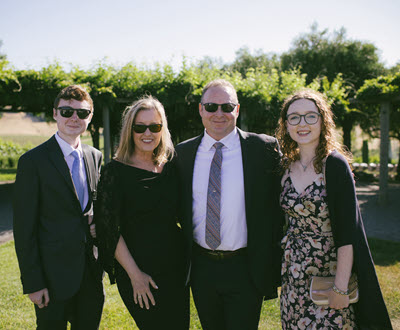
Military family life has been my whole life -- I was an Air Force kid, an Army sister, and a Coast Guard spouse. I am a mom to two college-aged kids, and I am a full-time university faculty member. My latest hobbies are trying to learn to arrange flowers and grow a garden. It's a work in progress!
Tell us about a "typical" day in your professional life.
A typical day would be a teaching day for me. I would start by traveling into Washington, DC from my home in Northern Virginia. I commute via metro, which I love. It is so convenient, and it gives me time to prepare for work.
I would start out reading and responding to emails, usually from students. When I get into the building, I grab coffee and start preparing my lectures for the day. Our university just moved us into a beautiful new building on Pennsylvania Avenue, right in the heart of DC, so I like to take advantage of the views while I go over my notes for the day.
I generally teach two to three classes per semester, some online and some in person. I specialize in media regulations and qualitative research methods. I also teach courses on communication ethics and digital media.
After preparing for my classes, while waiting for my teaching block to begin, I work on either research projects or administrative work. My job is a combination of teaching and program administration, which might include helping students plan and carry out thesis research or working on programming for later semesters. I also spend a lot of time grading, which is not my favorite, so I try to work that in a little every day.
When I teach my classes, I am on for about three hours at a stretch, leaving additional time to chat with students about their work or their plans. This is a highlight in my day.
After teaching, I take the next block of time to work on my own personal research projects. Right now, I am on an interdisciplinary team that is evaluating solutions for access to election records.
At the end of the workday, I get back on the metro to head home. I use the time to decompress from the day and plan for the next.
If you've been stationed overseas, how did this affect your career and or business?
N/A
What has been your biggest military spouse career struggle and how did you overcome it?
My greatest career struggle is not being able to find work in my field after a move. Expanding my skills to be able to teach online and conduct research from anywhere helped, but the job market also had to keep up with electronic possibilities. I spent a lot of time convincing potential employers that we could do a lot of the same work from a distance. I also kept myself updated on the technology and software that supported my work and might give me new skills.
What role did mentors and sponsors play in your journey?
I have amazing people in my career who just gave me a chance by being willing to open that door of opportunity to me. They may have known I would eventually move, or they may not have completely understood how I was using technology to carry out my research projects, but they supported me by believing in me.
How does your career path differ from what you imagined for yourself?
When I first started in academia, there was a set equation for getting a job, getting published, and applying for tenure. It never occurred to me that this equation would not work in military family life. I had to remake my path and reset my aspirations. Then, I worked toward my own goals, regardless of the way it was supposed to be done.
How did military life (PCSing, deployments, trainings, etc) factor into your career decisions?
I had a lot of trouble building a career trajectory, so my decision-making became more focused on what work I would do and how it would help me grow. Many of my positions were lateral rather than upward. I had to gather experiences instead of titles. I also had to find work that was in the virtual space to have some sort of consistency. I learned to teach online, and I worked in nonprofits that were virtual to try to stay ahead. I tried to make choices that would give me something to take to the next step, and most often that was new knowledge.
Have you ever had to geo-bach due to your career/entrepreneurship?
No
What resources have you found to be useful in your career/entrepreneur journey?
I love learning new things, so I am a huge fan of courses and certifications. LinkedIn Learning is an amazing resource. I also love Coursera, and even YouTube. It has always been my way of being able to say, "Yes, I can do that. I can make that work."
I also believe in occupational associations to help find what work is available, and what people are experiencing. It helped me see what skills would be necessary on the horizon.
Final word: what are your top tips for other military spouses about navigating a career within the military lifestyle?
Be flexible about your ideas of what your career should be. Sometimes the traditional path is just not going to work out as imagined, but that is not the only route forward. Had I stuck to the traditional way of moving forward in my career, I would have missed out on some incredible experiences and opportunities. When I look back, it was the moments taking chances on those unexpected possibilities that changed my career for the better.
| Listen to an interview with Shelley to hear more about her story. |
Tell Us YOUR Story |
Meet Spouses from Previous Weeks: