

Who Am I?
Thinking beyond my military spouse identity
by Dr. Krista Wells, The Military Spouse Coach®
The role of military spouse is so significant—we provide much needed at-home support to military members so that they can keep our country strong. However, so often military spouses tell me they want to be more than mom/dad or spouses. While they value these titles, they also want to have their own legacies that do not depend upon their relationships with others.
I can relate to this desire because I too struggled to forge a unique identity as a young military spouse when I was first beginning my coaching practice.
I remember going to a cocktail party where people robotically asked my husband and me “what we did.” My husband rattled off his impressive military job title, leaving people in awe of his service and abilities.
I, on the other hand, found myself stuttering, “I just started a business… I'm trying to have kids…”
I probably sounded lost. I began to dread questions about work because when I told people that I was a military spouse, they often gave me weird looks.
Even when I went to later parties prepared with my “elevator speech,” my career narrative never flowed. I would say, “Well, I am starting a coaching business…” and almost feel people's eyes glaze over. Then I would just add to the confusion by explaining too much.
I eventually realized that I wanted a better answer not for them but actually for myself.
I asked myself: Who am I beyond the spouse of my Marine husband? I was jealous of friends' fancy corporate titles and those with the official status of stay-at-home mom—I just wanted to be known as something.
After becoming a mother, I would notice my kids singing and dancing in front of the mirror, playing in the yard without a care in the world, and expressing their love for horses and baseball. Where was that joyful spirit in me, I asked myself, and how could I sublimate it as an adult in the real world?
I know that our identities are made up of much more than our jobs, are larger than the organizations with which we associate ourselves, and are deeper than our many roles. But I also know that we can't be as carefree as our kiddos in an adult world where responsibilities often consume carefree passions and creativity.
So, how do we develop identities that are not based upon our relationships with others? How do we tap back into our inner children, remain our authentic selves, and prevent criticism from constraining us?
We all need to take inventory of our authentic selves and how we present these selves to the outside world.
I perform a specific exercise with people who are reentering the workforce after many years at home or starting new careers once their spouses have retired. Give it a try for yourself below.
First, take out a blank piece of paper and begin identifying life themes that spark your motivation and interest. I've found that I resonate with life themes such as progress, relationships, and using my intuition. I love talking to men and women about their careers and spouse issues and encouraging perseverance across platforms.
As you think about your own identity, brainstorm what you believe to be true about your own unique body, mind, and soul. Dissect your answers and look for a common thread—your approach to life.
Once you better understand who you are, you learn to use your time on this earth more wisely and to serve more effortlessly. And, as your spirit takes action, you begin to define a legacy for yourself.
Mythologist Joseph Campbell says that one way to determine what fuels our life is to examine it. Imagine showing up at a movie that is half over yet being perfectly able to determine the plot. It's often easier to spot these themes in others' lives than to examine our own, which means that it's especially important to consciously reflect about our experiences.
Sometimes, it helps to think about what we loved doing as kids and then letting go of the particulars and seeing how the same passions manifest in adulthood. This process can definitely be easier and the connections more vivid for some people than others. One of my best friends loved lifeguarding, and then studied to be a nurse. My older sister loved flowers and ended up in environment studies, while my younger sister was super social and adored dogs, she studied public relations and then became a vet tech, and recently created an app for dog lovers called slobbr; their paths make perfect sense.
My passions always seemed more vague. However, looking back, my life's narrative probably has more flow than I give credit.
I was obsessed with rearranging the furniture in my bedroom in continuous attempts to make special, aesthetic improvements. As an adult, I enjoy organizing my life- and career-coaching clients toward success with that same childlike joy. I love putting order to things, often by helping clients design their lives and improve themselves along the way. I was coined the most talkative student, and now deliver keynote speeches.
While my career is as a life coach for military spouses is out of the box, I think of myself as a designer or architect who works with spouses to help them enact their own life's vision. I help them define themselves, beyond life as a military spouse and its so incredibly rewarding to help people dig deep and decide who they want to be.
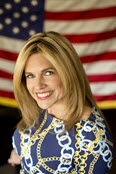
Dr. Krista Wells is a certified professional coach dedicated to empowering military spouses. In her private practice, she focuses on improving her clients' health, increasing their wealth, and strengthening their relationships. In addition to her private clients, Krista offers keynote speeches, workshops for organizations and military bases, and writes for various military publications. She recently launched The Military Spouse Show podcast in an effort to expand her reach and connect with the broader military spouse community.
Have a question about work-life balance for Krista? Ask here. Your question/answer may be printed in a future issue.