
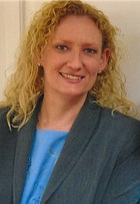
Swallowing Your Pride and Asking For the Help You Need
by Julie Waters, PHR
Last week, I broke my arm.
I've learned to let go of things that are clearly overrated in my current situation: shoes that tie, clean dishes, pony tails, lids of any kind, and multiple layers of clothing. I've also learned to appreciate things that are clearly under-rated for a cast wielding single mom: head bands, driving with your knee, food you don't have to cut with a knife.
Like many of you, I hate asking for help, but this week I have had to swallow my pride, ask for help from friends and family, and will have to continue to have to lean on their generosity for the next couple of months. My current situation serves to remind me of the importance of networks. The situation may be different than job-hunting, but the lesson is still the same. I need help, whom can I call? Who will understand? Who won't be a jerk about it? Fortunately, I have fantastic friends and family who have stepped up to help out by: picking up my meds, picking up the kids, picking up a pizza and then doing the dishes before leaving. They have been great about asking what I need and even better, anticipating what I might need and just doing it. Clearly, I'm a lucky woman.
It is in times like these that I am reminded of the importance of giving and not necessarily just giving back to those who have helped me, because they are seldom the ones who need the help. Think of it as paying it forward, or being a good person, but if I hear about or see something that needs to be done, I've found it's probably easy to just jump in and do it. (Confession: I'm not completely motivated by altruism; it's incredibly satisfying to help someone out.)
Anticipate
Whether it's a mom with two kids and a broken arm, or a "new to this town" military spouse, look around and see who looks lost. What did you need in that situation? You are in a position to make that person's transition a successful one. Ask about profession, neighborhood, just anything to start the conversation. Don't make them ask for the help.
Listen
All this paying attention and anticipating, it's not just for one-time encounters. Think for a moment about the last time you did something nice. Go ahead, pat yourself on the back. Was it hard? Were you happy to do it? Would you do it again? Did you have to be asked? Much has been written about using your networks for getting a job. We've also touched on being a part of that network that gives the jobs. There is such satisfaction that one gets from helping out a friend, colleague, friend of a friend, random military spouse, etc. Be the part of your network that helps. Set the example, because one day you may be the one who needs the hand. (Pun totally intended!)
In the building where I work, the woman at the front desk can sometimes have a bit of a sour disposition. I always try to be extra pleasant when I see her. One day the sour had changed to sad and I asked her if she was ok. It turns out that her son was an Army Veteran who had committed suicide after returning from Iraq. Her daughter-in-law was struggling through "the system" to get benefits for her and her son. This woman didn't know I was a former military spouse. She didn't know I would able to connect her with a local organization and a contact name and number to get her son's wife the help she needed to navigate the system. All I had to do was pay attention, listen, and provide a phone number. What can you do today simply by paying attention?
We are all busy. And we are too keenly aware that one monkey wrench thrown into the works (broken arm, broken car, broken lawnmower) can lead to your house of cards completely collapsing. We've all been there and we can help each other through the collapse. So look around, anticipate, and listen. Then take the step to be the person that your network will be happy to help when you need it. Even though you hate to have to swallow your pride and ask.
Julie graduated from the University of Washington with a BA in English and earned an MS in Human Resources from Troy University. She is also a certified Professional in Human Resources (PHR). Over the last twelve years, Julie has held various Human Resources positions since getting her start at FHC Health Systems in Norfolk, Virginia, to include serving as the Director of Human Resources at the Military Officers Association of America in Alexandria, Virginia. Julie currently resides in Spokane, Washington where she is the Human Resources and Operations Manager at a law firm. She was lucky enough to choose a career that easily transfers between employers as each military assignment introduced her to a new city and even a new part of the country. Julie holds a special interest in career building for military spouses as she feels it is important to have something personal outside of the military lifestyle.
Have a question about building your career for Julie?
Ask here. Your question/answer may be printed in a future issue.
While it may seem that this is a chance to complain, I have accidentally come up with a new way and a new reason to leverage your networks. Let's talk about asking for help and paying it forward.