
Interview with Dr. Mette Beecroft
by Sue Hoppin
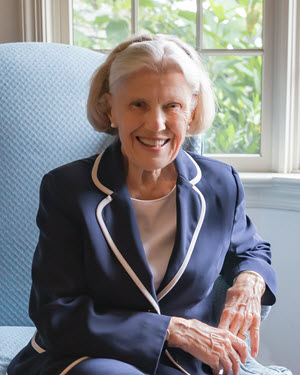
Tell us about the Family Liaison Office (FLO). Why do you think it came about?
The creation of the FLO reflected what was going on in society. In 1972, the “feminist revolution” was beginning to take form. In that year, the Department of State (DoS) issued “The 1972 Directive”, which stated that Foreign Service (FS) wives (they were on their way to becoming “spouses”) were private individuals who could no longer be asked to perform various representational duties for senior FS spouses at post. Also, spouses were no longer to be included in the employee's efficiency report. Thus, younger FS spouses who objected to being asked to perform representational duties found that they had a new degree of independence. However, it also caused problems as senior spouses felt that all their hard work had become invalidated.
At the same time, in the United States as a whole, many younger spouses were starting to work and to have professional careers. However, the possibility for young FS spouses to work was almost zero because diplomatic tradition didn't provide for that. At the same time, as Stephanie Kinney pointed out in her paper on creating the Family Liaison Office, by 1975 both political parties were including “strengthening the family” in their platforms. It was becoming more difficult to ignore family issues.
Some of the spouses who were concerned about the family in the FS discovered that about 35% of the male FS Officers (FSOs) who participated in a small survey said that the working status of their wives or the possibility of work would influence their next choice of assignment. In fact, this could become a management problem.
There was a great deal of behind the scenes work. The younger generation was beginning to make new demands of DoS Management, in many cases supported by senior spouses who understood what was going on. In 1976, the Association of American Foreign Service Women (AAFSW) formed a group within the Association called the FORUM which was to serve as the organization's “think tank.” The FORUM “sought to indentify the concerns of FS spouses and families through a series of well-attended open meetings.” These meetings underlined that times were changing and it was becoming increasingly hard for DoS Management to ignore the changing times.
Ultimately, it was the FORUM which wrote “Report on the Concerns of Foreign Service Spouses and Families” on the basis of some 9,000 questionnaires which they sent out literally all over the world. The FORUM members divided their investigations into 6 basic groups:
- Family Life Study Group—which included education for children, health concerns, support services and finances and family life
- The Modern Foreign Service Wife—limited gainful employment and career opportunities for spouses; constraints on employment
- Spouses' Skills Talent Bank—4,672 spouses were asked about their employment status; they came up with many advance degrees and frustrated FS spouses with professional qualifications who were dissatisfied with the total lack of employment possibilities
- Orientation and Training—more information about what Foreign Service life is really like and training to facilitate r adaptation to this life, mainly language studies
- Re-entry—reverse culture shock; medical treatment at the DoS; spouses observed that a “The Family Liaison Office” function could help to reduce re-entry concerns.
- Women in Transition-retirement, widowhood or divorce.
Page six of the introduction to the Forum “Report on the Concerns of Foreign Service Spouses and Families” contained 11 recommendations, the second of which was to open the Family Liaison Office (FLO). The report was submitted to then-Secretary of State Cyrus Vance who supported the second recommendation. He wrote, “I believe that we should establish the FLO or its equivalent with all deliberate speed.” That was what we were waiting for.
You have a PhD in French. What lead you to being appointed Deputy Director of FLO?
One of the most important concepts for FS spouses and, I suspect for military spouses as well, is flexibility. We had just returned from a posting in Paris, our second child was less than a year old and I had not yet decided what I was going to do. I had more or less assumed that I would teach at the college level because I had already done so at the University of Pennsylvania and had discovered that I enjoyed it and that I got along well with my classes.
Since I had always been interested in things educational—if for no other reason than the need
to keep an eye or our son's schooling, I offered to volunteer at the Foreign Service Education and Counseling Center (FSECC) which I did for about two years. In 1978, the Director of the FSECC was selected to be the Director of the new FLO. Both knowing the newly selected Director and also thinking that the new FLO was a very good idea, I applied for the Deputy Director's position and was selected from a field of some 45 applicants. From the very start, it was a most rewarding and absorbing job. And I discovered the pleasure of working directly with people and helping them to sort out a wide variety of concerns. There was nothing “ivory tower” about the job. I must admit that working to get the PhD sometimes made me question if that was what I really wanted to do.
Later, the FLO became CLO. Why the name change?
At first all the satellite offices overseas (We started with 15 offices and there are now 240 of them.) were also called FLO-Family Liaison Offices. However, while I was in Bonn, some singles took exception to the name because they claimed that the title implied an interest only in families to the exclusion of singles. So we changed the name of the Bonn FLO to CLO or Community Liaison Office. Then others posts began to follow suit. However, the main office at the DoS remained the Family Liaison Office—which is not quite consistent because no one complained about the FLO in Washington working only with families—which they do not.
The late 1970's and 1980's heralded a change in culture for FS spouses, which of course has not stood still. You've bridged many of these cultural changes. Was this conscious?
When I first started to work in the FLO in the DoS in 1978, I soon realized that I had an opportunity to develop skills and get experience which could/would make it possible for me to get jobs all over the world, provided that the post to which we were assigned had a Community Liaison Office. I realized that I was not using what I considered to be my professional preparation but also that in the FS, you have to be flexible, and not look a “gift horse in the mouth”, as the saying goes. Thus I ultimately was associated with five different CLOs—in Bonn, Cairo, Brussels, Ouagadougou and Amman—all of which were great sources of satisfaction.
I also realized that through my own experience, I was in a position to help different generations of women at post understand one another better. In fact, I came to think of myself as a “hyphen” between generations because, given my age, I had a foot in each camp. I could explain to the older generation of FS spouses why the younger generation wanted to work and I could explain to the younger generation why they older generation thought that the younger generation should NOT work.
How have your skills as a professor and academic helped you in your FLO/CLO work?
Skills as a professor and an academic have very definitely been useful in my FLO/CLO work. One basic principle for both military and FS spouses is the concept of “transferable skills” which is to say that skills and experience from one job or type of endeavor may turn out to be very useful in a totally different context. For example, as an academic, I taught many classes, got on with many types of students with varying capabilities and personalities, did a lot of writing, did a lot of explaining of grammar requirements and kept a lot of individual records organized for each student.
Working in the FLO or in one of the CLOs, I used all of these skills. I had to be able to brief both large and small groups of new arrivals to post, making the information comprehensible to both new and experienced employees and their families. I also had to deal with people from different agencies with varying degrees of experience overseas. When dealing with complicated rules and regulations, I had to be able to predict what people would find difficult to understand. Often I had to explain one issue in various ways. Briefings had to be analytical and organized and presented in a way that everyone understood. As a CLO/FLO, I also wrote many informational pieces, both short and long. In other words, many of the skills (if not the subject matter) used as a professor and academic were very useful as a CLO/FLO. (And sometimes even my ability to speak French was helpful.)
You have managed to move between volunteer and paid roles while building a career as a FLO/CLO. Was this intentional? Was this helpful?
It was both intentional and helpful. For example, I soon learned that you never know when you will next use something that you have learned in one job, in another job. I started my volunteer work at the DoS in the little Foreign Service Educational and Counseling Center (FSECC) which I mentioned under question #2 above. However, the basic knowledge of boarding schools, correspondence schools and college admissions, learned at the FSECC, stood me in good stead first in the FLO and then in the CLOs. And I continued to learn as I worked. I discovered specialized sources of information that would be useful for people trying to get into school in the US from an overseas address. In fact, all the way back in 1979, while I was still working in the FLO, I wrote the proposal which enabled us to hire the first real Education Officer to work with clients since it was clear (and it was no surprise) that education was (and still is) one of the main concerns of all Foreign Service families.
Another very different example: In Cairo, on a volunteer basis, I chaired the preparations for the community July 4th celebration for 4,000 people. This included a large number of USAID contractors and their families. It also included people such as the “oil riggers” who were working on oil rigs in the Gulf. I had never done anything of that magnitude before but I accepted to do it because Cairo could be difficult and the celebration was a positive morale factor. That experience showed me that I could be organized, figure out what to do and make the event happen. Thus it gave me both confidence and know-how to carry on to other events which I did as the FLO or as a CLO.
Do you believe that it is possible for Foreign Service spouses to have a separate career? What are your thoughts around expectations of spouses in terms of supporting the mission? Did you ever consider becoming a “tandem?”
A separate career: I think that it is possible for spouses to develop a separate career but it depends very much upon what the spouse wants to do or how flexible she/he can be. Portable careers such as photography, writing, painting work best. And there is also the possibility of some form of “teleworking.” The DoS is beginning to realize that all living quarters must be wired. On the other hand, in some locations, connectivity is simply not good and often the embassy cannot do anything about it. If a spouse is set on a career which has an orderly career progression or promotions, that may be more difficult, even if the educational preparation has been completed. For example, it would be very difficult to advance in a law firm, gain academic tenure at a college or university or engage in scientific research. Occasionally, a spouse who is an MD or FS Nurse Practitioner has been able to work in/with the DoS Medical Division—in other words a type of “tandem.” Through the FLO and the Foreign Service Institute (FSI), the DoS provides many courses on career choice, getting started and continuing to develop a career. But it is never easy. And knowledge of the local language is always a problem if one is overseas. It is very difficult to develop language fluency to the point where one can actually work on the local economy if one did not have considerable prior knowledge of the local language.
Supporting the mission: Now that no requirements are made of family members, as stated in “The 1972 Directive,” mentioned above in the very first paragraph, theoretically no one has to do anything. However, as one can easily understand, such lack of engagement leaves much community support unfinished. When the “72 Directive” first came out, young, brash FS spouses took this to an extreme with their new found liberation. However, my argument was always that people could be at least as cooperative as they would have been if they were living in their old state-side community. And if people have any sense of being at post to represent the US, a fact that one cannot escape, they are also more cooperative. Some would set the limit at not being out of pocket. There is a limited amount of so-called “representational funding” which one receives if 50% of the guests are host country or third country nationals. If you are giving a dinner party which would be sanctioned but there is no funding, then you pay and take it off on your taxes as a business expense. But you foot the immediate expense. Acceptance of these responsibilities varies. By this time, cooperation and volunteer work in the name of the post has again become acceptable though more on one's own terms.
Spouses who decline to participate place a tremendous burden on the two senior spouses, the wives of the Ambassador and of the Deputy Chief of Mission—the number two position. To me this did not seem fair. As a junior spouse at a new post, I would go and talk with the ambassador's spouse and say, “I know that you have been told that you cannot ask me to do anything. However, I just wanted you to know that you are welcome to ask me for assistance. I will do my very best to cooperate. And if I really can't help at that moment, I'll say so.” That approach seemed to work well.
Becoming a “tandem:” The fact that I did not become a tandem is probably to some degree a function of age. While we were overseas, I found the CLO jobs to be very fulfilling and something which I believed very much needed doing. The appointment to one of these positions was on a post by post basis. So there was never a guarantee before one came to post. Nevertheless, I was building up enough experience and reputation to make people want to put me in the job. So I was usually successful. I continued to learn more about the job every time I did it another place and it was always a challenge. While I was in the midst of doing these jobs, I didn't think much about becoming a tandem. There were also subtle changes. The director of the CLO was at first called the CLO Coordinator. However, I soon was called the Community Liaison Officer—implying an equivalence with a regular Foreign Service Officer. And in Brussels, I received a Department of State Superior Honor Award which, in the past, had only been given to a regular FSO. The job was so rewarding and so well supported by the mission that I did not think much about becoming a “tandem.
Then, when we returned home for an extended period, employment took care of itself—so to speak. And this is what I mean by seizing an opportunity presented. It was 1998 and I was trying to decide what I might do. By this time, I was 65 and beyond the age that the DoS would accept a new FSO. However, on the basis of all my experience as the Deputy Director of the FLO and in all the CLOs, I was asked to join the Division of Travel and Transportation, a group of some 80 Civil Service who were responsible for arranging the travel and the moving of people's household goods all over the world. The Division had a poor reputation and I was being asking to make the Division work better for employees and family members. Those were my marching orders –but nothing specific. What I became was a program officer and I was in a position to develop my own program to improve things. The rules and regulations are complicated and I decided that people really needed to understand how things work, what they could ask for and what they could expect. And so I started to give briefings. Very soon, I went from no briefings at all to about 45-50 briefing sessions each year given to some 2,000 people. This I did entirely by myself. I worked a lot with people on an individual basis through e-mails from all over the world, telephone calls and personal meetings. I explained the regulations orally, and wrote hundreds of explanations which went all over the world. I tried to help people solve their problems by taking a fresh look at things and occasionally, ended up doing a bit of “handholding” as well. I also served as a source of information for other offices at STATE- the FLO and also the Foreign Service Institute. What very soon became abundantly clear is that people deeply appreciated the individual response to their concerns. I never told anyone to go to their computer to look up the regulations. Helping people tread their way through the bureaucracy, suggesting sources of help and making things work out for them was enormously satisfying.
At age 65, I had not planned on doing this job for more than 3 or 4 years. However, I stayed on for 16 years until I was 80. The job satisfaction and the hundreds of lovely notes I received proved beyond a doubt that people were tired of an extremely impersonal and bureaucratic approach and appreciated personal engagement on my part.
In this sense, my DoS career was divided into two parts—the FLO/CLO part and the briefings and problem solving in the Division of Travel and Transportation. However, in the second phase, I worked very closely with the FLO and the CLOs overseas who depended upon me to give them individualized and knowledgeable support on a part of the operation (Travel and Transportation) which was highly specialized and which was not directly their responsibility.
Could you explain “family member appointments”?
Even from the time the FLO opened in 1978, spouses were making the point that in some cases, it would save the USG money if they, as qualified spouses, could be used at post to fill staffing gaps. They said it made much more sense than to bring another FSO to post with all the expenses entailed. The spouse was already there.
The campaign to use qualified spouses has a long and complicated history which has been gaining traction little by little. Some basic problems have always been that for a spouse to work, she also needs a security clearance which takes far too long. The need for spouse services might be long gone by the time the clearance finally comes through. Then there was the problem of making it possible for the spouse to carry the clearance with her—that is to keep it after she had finished the job for which she got the clearance so that she could use the clearance in her next job. A lot of progress has been made. Earlier on, spouses were being employed in so-called PIT (part-time, intermittent and temporary) positions. Personal Services Contracts were also used. Later on came the EPAP Program – Expanded Professional Associates Program which allowed up to 200 spouses with professional qualifications to do jobs involving economics, political analysis, public diplomacy, financial policy or general services. These were all “family member appointments”.
And now comes a program which is not yet fully implemented which is called the FS Family Reserve Corps (FSFRC) which will put many more qualified spouses to work in a much more organized fashion. The implementation will take place over a period of two years. And it will make it possible for a spouse to carry her clearance with her. It has not yet managed to shorten the time involved waiting to get the initial clearance. The various categories of jobs mentioned above were all jobs filled temporarily by qualified spouses overseas.
Other “family member appointments” were made for qualified spouses to fill Civil Service vacancies in Washington on the basis of so-called “non-competitive eligibility”(NCE). To obtain NCE, a spouse needed to have worked for 18 months while overseas. Having NCE meant that a qualified spouse could compete for a Civil Service job without having to go to the end of the line each time. Because a FS spouse is never in the US for very long, it would otherwise mean that they would never get a job because the people who lived here would always be in line ahead of them. As it has turned out, office managers are very eager to hire NCE candidates because they have earned an excellent reputation. They are generally considered to be talented and experienced. To systematize the process, two registries have been created, one to record the names of people who hold NCE jobs, the other to record the jobs for which NCE candidates may apply.
The AAFSW has long been a voice of advocacy for Foreign Service spouses and families. Where do you see its focus now?
I am certain that issues related to spousal employment will continue to be extremely important if not the most important concern. When families with two incomes are becoming the norm many places in the United States, it is to be expected that FS families want the same possibility.
Furthermore, the educational level of FS spouses is high with many doctoral degrees and even more masters' degrees and people want to use their training.
Access to language training has always been a sore point because spouses have been permitted to take language classes only if it was not filled by employees.
Another concern which was expressed when the FLO first opened is making sure that spouses have access to all the information, orientation and training they might need. There is a lot of support available but often the problem is knowing that the support exists or, knowing that the support exists, locating it. The AAFSW has just put together a “road map” to facilitate the process of finding and then taking advantage of all the resources which are available.
A very thorny concern is how to require decent behavior when a marriage is breaking up and all the power is in the hands of the employee. If an employee is inclined to be uncooperative, that employee can cut off all financial support to the spouse. Even if the FLO or the Deputy Chief of Mission at post tries to intervene, the Legal Division holds that divorce is a private affair and that the Department of State has no role in a divorce. The results of this essentially “hands-off” policy can be devastating.
Another item which has now become an issue concerns mental health support. For years, the Employee Consultation Service (ECS) served both employees and family members. The ECS has recently reduced their service to exclude family members. The AAFSW would like to see a return to the practice of supporting both employees and family members.
In taking a stand on any issue, the AAFSW has the enormous advantage of being independent and of not having to “clear” anything with State Management. On the other hand, the FLO is much more limited. But, it can turn to the AAFSW requesting that it say what the FLO cannot say.
What “anticipatory guidance” would you give to a new Foreign Service spouse?
The Overseas Briefing Center (OBC) exists to provide information about every post. People usually use this information to help them rank order the posts for which they would like to be considered. In the process the spouse and his/her family have to decide what is most important to them: schools, spousal employment, general morale, recreation/travel, security, housing, professional development, hardship pay to name a few. Once the family knows where they are going, it is prudent to find out as much about post as possible. No post is perfect and if you know what the imperfections are, you will not be as disappointed or as surprised when you discover post reality. In other words, because you have done research about the post, you are in a position to anticipate what the problems might be which in turn lessens the impact of any problem.
Children react very differently to moves. Some move well. Some are more fragile. It is useful to provide “anticipatory guidance” for children as well so that they have some idea of what their new life will be like. One also should discuss with children (if age appropriate) how they can maintain connections with old friends even while making new ones. In our digital age, this is not so much of a challenge as it used to be. It is useful to remember what an old military study (about 15 years ago) illustrated which is that the attitude of the mother (not even the parents) determines how well children will adapt to a new post.
People need to know that the Foreign Service can be fascinating, challenging, puzzling, rewarding, exhausting, frustrating and even terrifying. It is a highly specialized way of living which often tests one's ingenuity. One can only flourish with flexibility, a sense of humor, a sense of adventure, determination, ingenuity and the existence of a supportive community with whose members one can share a variety of new experiences.
*